
Best Garden Rakes in 2026: Our Top 3 Picks Reviewed
Disclosure: We may earn a commission when you buy through links on this page, at no extra cost to you. As an Amazon Associate I earn from qualifying purchases. Learn more

Our best garden rake picks for leaves, soil and mulch, plus a guide to rake types, head width, tines and handles.
A rake looks like the simplest tool in the shed, yet the wrong one turns yard work into a fight. Flimsy tines bend on the first pile of wet leaves, short handles force you to stoop, and a heavy steel head wears out your arms long before the job is done. The best garden rake matches the job in front of you: a sturdy bow rake for soil and gravel, a wide leaf rake for lawns, or a landscape rake that does a bit of both without straining your back.
We compared current rakes sold on Amazon by their published specs, verified owner feedback, expert reviews and price against value. Three stood out: The Groundskeeper II as the best overall pick for thatch, leaves and mulch, the Bully Tools 16 inch bow rake as the runner up for heavy soil and stone work, and the TABOR TOOLS adjustable leaf rake as the best value for tight spaces and easy storage.






Our Top 3 Picks at a Glance
- Best Overall: The Groundskeeper II Rake (around $40). A 21 inch head with durable steel tines on a light 55 inch fiberglass handle, built for de-thatching, leaves and landscaping.
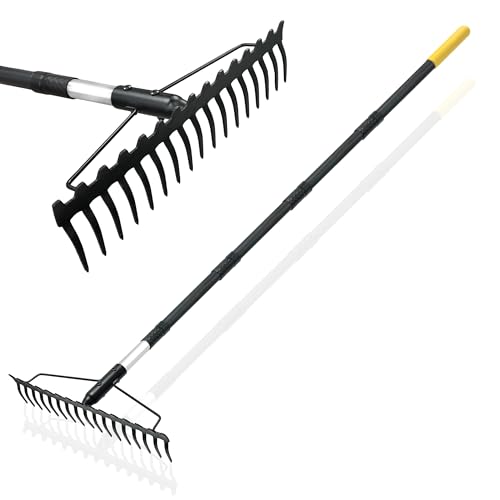
- Runner Up: Bully Tools Bow Rake 16" with Fiberglass Handle (around $40). A 10 gauge USA made steel head with overwelded tines for breaking up soil and spreading gravel.
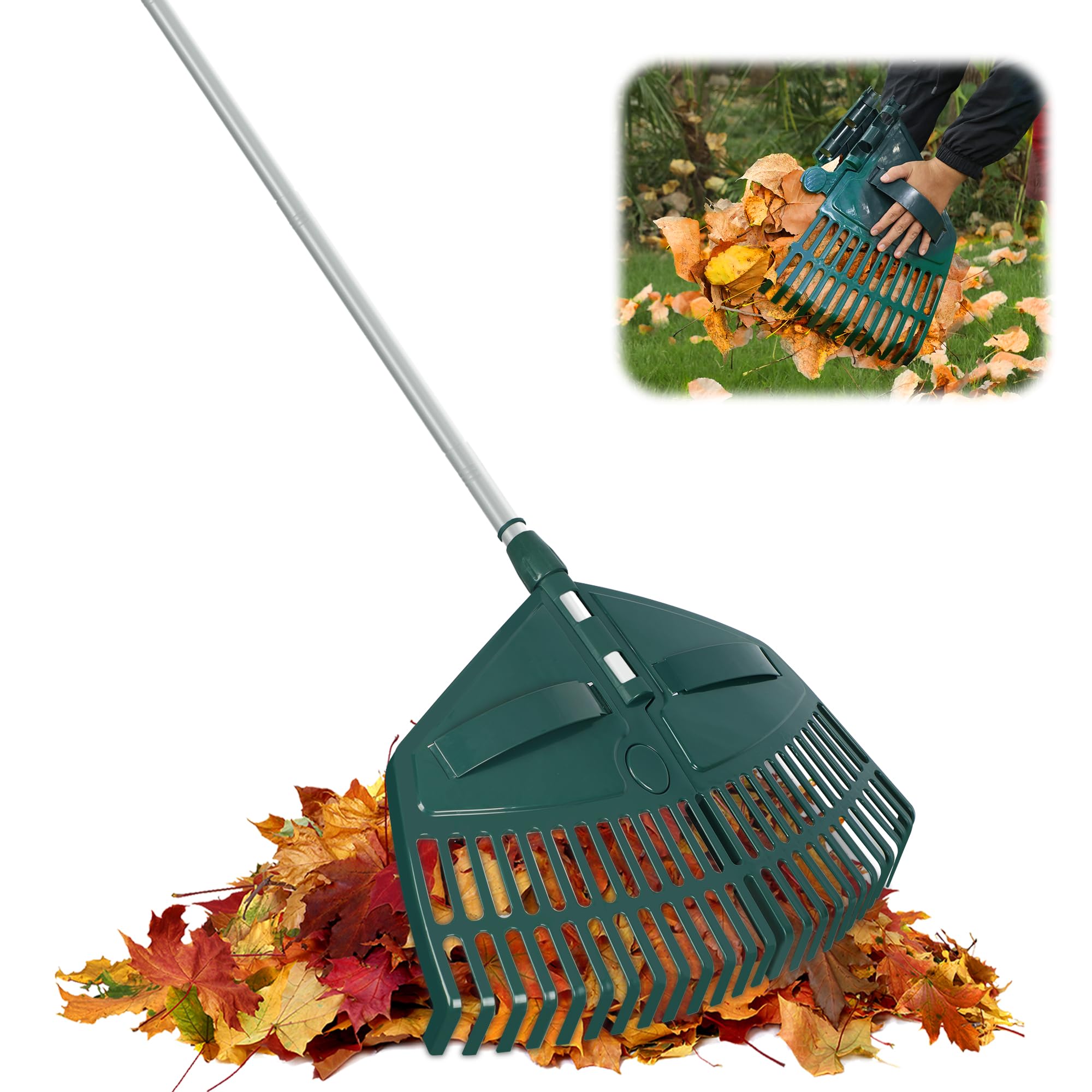
- Best Value: TABOR TOOLS J16A Adjustable Metal Leaf Rake (around $30). An expandable 8 to 23 inch head and a telescopic handle that collapses to 32 inches for storage.
The comparison table above also lists more choices, including the Fiskars PRO rake, the PLSLT Pro-Lite leaf rake, a wide VEVOR landscape rake, and affordable bow and leaf rakes from Walensee, BlumeTrec, WORKPRO, ORIENTOOLS, Altdorff, Coopvivi and YEELOR.
How We Chose the Best Garden Rake
We focused on what makes a rake pleasant and effective over a long session: head design, tine strength, handle length and material, and overall weight. We sorted rakes by job, separating heavy duty bow rakes for soil and stone from wide leaf rakes and versatile landscape rakes. Owner feedback on Amazon carried a lot of weight, especially for rakes with a large base of verified reviews and consistent comments about tines holding their shape. Finally, we compared price against build quality and warranty, and confirmed every pick is in stock.
Garden Rake Reviews
Each review lists the maker's confirmed specs, why the rake earned its place, its main pros and cons, and who it suits. Because rakes are inexpensive, many gardeners end up owning two: a bow rake for beds and a leaf or landscape rake for lawns. Our three picks cover both jobs. If you are wondering what is the best garden rake to buy first, start with the one that matches the task you do most often, then add a second rake later if your yard needs it.
1. The Groundskeeper II Rake: Best Overall
- 21 inch wide head
- Durable steel tines
- 55 inch lightweight fiberglass handle
- Designed for gardening, de-thatching and professional landscaping
Why We Picked It
The Groundskeeper II has a devoted following among gardeners and landscapers because it does several jobs well. Its 21 inch head with steel tines pulls thatch out of lawns, gathers leaves and spreads mulch evenly, so you can tackle spring cleanup and fall leaf season with one tool. That versatility makes it the best easy to use garden rake for most households that do not want to buy several specialized rakes.
The 55 inch fiberglass handle keeps the weight down and resists rot and splintering, which helps over long sessions and when the rake sits in a damp shed. A light rake also encourages a more upright working posture, because you can let the tines do the work instead of pressing down with your shoulders.
The steel tines are tougher than plastic or bamboo, so they hold up when you hit roots, gravel or small stones. If you need to work in hard soil or move heavy material, a bow rake is still better, but for everything else the Groundskeeper II is the rake we would grab first.
Pros
- Handles thatch, leaves and mulch in one tool
- Light fiberglass handle
- Steel tines resist bending
- Huge base of satisfied owners
Cons
- Not built for breaking up compacted soil
- Handle length may feel short for very tall users
Who Should Buy It
Choose the Groundskeeper II if you want one rake for lawn care, leaf cleanup and spreading mulch, and value a light tool you can use for hours. At around $40, it is our top choice for most yards.

2. Bully Tools Bow Rake 16" with Fiberglass Handle: Runner Up
- 16 inch wide, 10 gauge American steel head, made in the USA
- Robotically overwelded connections keep tines from snapping
- Ribbed teeth and reinforced ridges for strength and digging power
- Fiberglass handle with polyester veil and rubber grip
- Choice of 58 or 66 inch handle length
Why We Picked It
When the job involves soil, gravel or stone, you need a bow rake, and the Bully Tools model is built like few others. Its head is made from true 10 gauge American steel, and the tine connections are robotically overwelded so they do not snap off when you drag heavy loads. Ribbed teeth and reinforced ridges add strength for breaking up compacted soil and leveling beds before planting.
The fiberglass handle is coated with a polyester veil to prevent splintering, and a rubber grip reduces hand fatigue. Bully offers it with a 58 or 66 inch handle, so taller gardeners can choose a length that keeps them upright. Business Insider named it the best bow rake in one of its roundups, a nod to how well it is made.
For gardeners who build raised beds, spread gravel paths or prepare soil every spring, it is the best durable garden rake we found. It is heavier than a leaf rake, so it is not the tool for gathering leaves across a big lawn.
Pros
- Very strong 10 gauge steel head
- Overwelded tines resist snapping
- Two handle lengths to fit your height
- Made in the USA
Cons
- Heavier than leaf or landscape rakes
- Narrow 16 inch head is slow for leaves
Who Should Buy It
Pick the Bully Tools bow rake if you work with soil, gravel, mulch and stone, and want a rake that will not bend or break. At around $40, it is a tool you buy once.

3. TABOR TOOLS J16A Adjustable Metal Leaf Rake: Best Value
- Expandable head from 8 to 23 inches, locks at any width in between
- Galvanized steel wire teeth
- Telescopic steel handle, 63 inches extended and 32 inches collapsed
- Folds to a tight profile for storage
- Made for leaves, grass clippings and light debris
Why We Picked It
The TABOR adjustable rake earns its spot through versatility and storage. Its head expands from 8 inches for tight spots under hedges and between flower beds to 23 inches for sweeping open lawn. That makes it easy to rake around plants without damaging them, something a fixed wide rake struggles with.
The telescopic handle extends to 63 inches and collapses to 32 inches, and the fan folds into a tight profile, so it fits in a small shed, a closet or even a car trunk. Galvanized steel teeth resist rust, and the steel structure is designed to handle sun and weather. For anyone with limited storage, it is the best compact garden rake we found.
TABOR notes it is not meant for cement or heavy duty debris, so leave gravel and soil to the bow rake. For leaves, clippings and light cleanup, it delivers excellent value and is among the best lightweight garden rake options at its price.
Pros
- Adjustable head for tight spaces and open lawn
- Collapses for very compact storage
- Rust resistant galvanized teeth
- Low price
Cons
- Not for gravel, soil or heavy debris
- Adjustable joints add parts that can loosen over time
Who Should Buy It
Buy the TABOR rake if you mostly rake leaves and clippings, garden around tight beds, or have little storage space. At around $30, it is the best budget friendly garden rake in this guide.

Who Should Buy a Garden Rake (and Who Should Not)
Almost every yard benefits from at least one good rake. Homeowners with lawns need a leaf or landscape rake for fall cleanup and spring thatch removal. Vegetable gardeners and anyone with flower beds need a bow rake to break up clods, level soil and spread compost or mulch. People with gravel paths or driveways use a bow rake to keep stones even.
If you have a large property with heavy leaf fall, a rake may not be enough on its own; a leaf blower or lawn sweeper can save hours, with a rake for the final touches. For bigger or tougher jobs, our guide to the best garden rake for heavy duty use covers stronger options, and for typical lots our best garden rake for backyards picks focus on all round tools.
Who does not need a rake? Apartment dwellers with only a balcony garden can get by with a hand rake or cultivator. And if you already own a sturdy bow rake and a leaf rake in good shape, there is little reason to upgrade unless the handle is cracked or the tines are bent.
How to Choose the Best Garden Rake
Start with the jobs you do most. If you are unsure, our guide on how to choose a garden rake walks through each type in more detail, and the points below cover the essentials.
Leaf Rake vs Bow Rake
Leaf rakes have long, flexible tines arranged in a fan, which glide over grass and gather leaves without tearing turf. Bow rakes have short, rigid steel tines on a straight head, built for soil, gravel and mulch. Landscape rakes sit in between, with wide heads and firm tines for leveling and light thatch removal. Most homes are best served by owning a bow rake plus either a leaf or landscape rake.
Head Width
Wider heads cover more ground with each pull, which is ideal for open lawns. Narrow heads fit between plants and in corners. Adjustable rakes give you both in one tool, while a 14 to 16 inch bow rake is standard for bed work and a 20 to 24 inch head suits leaves. Very wide heads of 30 inches or more speed up big lawns and leveling jobs, but they get heavy when loaded with wet leaves or soil.
Tine Material
Steel tines are strong and last for years, especially on bow rakes. Spring steel leaf rake tines flex without breaking. Plastic and poly tines are light and gentle on lawns but can crack in cold weather. Galvanized or coated steel resists rust when the rake is stored outdoors. If you rake gravel or rocky soil often, choose thick steel tines with welded joints, since thin wire tines will spread and bend over time.
Handle Length and Material
A handle long enough to let you stand upright saves your back; most adults are comfortable with 54 to 66 inches. Fiberglass is light, strong and weatherproof. Wood is traditional and comfortable but can split or rot if left outside. Aluminum and steel telescopic handles allow adjustment and compact storage.
Adjustable Heads
Adjustable rakes change width to suit the job, making them handy for beds, hedges and lawns alike. They are also easier to store. The trade off is extra moving parts, so check that the locking mechanism feels solid before relying on it for heavy use.
Weight and Durability
Light rakes reduce fatigue during long sessions, which matters for seniors and big yards. Heavy rakes are more durable and better for soil and stone. Look for welded or reinforced tine connections on bow rakes, and a sturdy ferrule where the head meets the handle. Our guide on how to use a garden rake shows techniques that help any rake last longer.
FAQs About Garden Rakes
How long does a garden rake last?
A quality steel bow rake can last decades, while leaf rakes typically last several seasons to many years depending on tine material. Fiberglass handles hold up longer than wood in wet conditions. Storing rakes indoors and cleaning off soil after use extends their life considerably.
Is a garden rake worth the money?
Yes. A good rake costs little and saves effort every season. Spending a bit more on strong tines and a comfortable handle means fewer replacements and less strain on your back. For most homeowners, a quality rake is one of the best value tools in the shed.
How much should I spend on a garden rake?
Most good garden rakes cost between about $20 and $40, which is where you will find the best affordable garden rake options. Specialty professional rakes and wide landscape rakes can cost more. Spending around $30 to $40 usually buys a rake that lasts many years.
How do I maintain a garden rake?
Brush off soil and debris after each use, and dry the rake before storing it. Hang it with the tines up or against a wall to avoid stepping on it. Check for loose heads and bent tines, wipe steel parts with a little oil to prevent rust, and store wood handles indoors.
Final Verdict
The Groundskeeper II is the best garden rake for most yards, combining a 21 inch head with steel tines and a light fiberglass handle for leaves, thatch and mulch. The Bully Tools 16 inch bow rake is the runner up for heavy soil and gravel work, and the TABOR TOOLS adjustable rake is the value pick for tight spaces and compact storage. Prices change often, so check today's price on Amazon before you buy.


