
How to Use a Wheelbarrow: Simple Steps, Tips and Mistakes to Avoid
Disclosure: We may earn a commission when you buy through links on this page, at no extra cost to you. As an Amazon Associate I earn from qualifying purchases. Learn more

Load over the wheel, lift with your legs, dump forward: how to use a wheelbarrow step by step, plus tips and common mistakes.
To use a wheelbarrow, load the heaviest material toward the front over the wheel, keep the load level and below the rim, then bend your knees, grip the handles evenly and lift with your legs before pushing at a steady walking pace. Dump by lifting the handles and tipping the tray forward over the wheel, never by twisting your back.
That is the core of how to use a wheelbarrow, and it works whether you are moving mulch, soil, gravel, firewood or garden waste. This guide covers safety and prep, the right way to load, lift, push and dump, plus pro tips, common mistakes and how to keep a wheelbarrow rolling smoothly for years.

Before You Start: Safety and Prep
A wheelbarrow looks simple, but heavy loads can strain your back, tip on slopes or pinch fingers. Wear sturdy shoes with good grip and work gloves to protect your hands from blisters and splinters. If you are moving sharp stone, concrete or thorny branches, add safety glasses.
Plan your route before you load. Clear tools, hoses, toys and loose stones from the path, and look for soft ground, steps or steep slopes that could tip a full load. Lay down boards or plywood over lawns and soft soil to keep the wheel from sinking and to protect the grass. If you need to go up a curb or step, set up a sturdy ramp first.
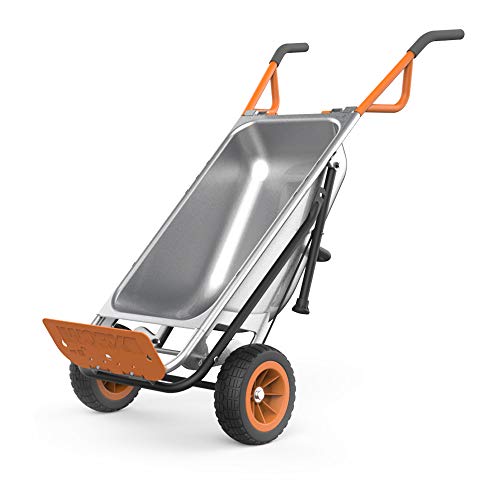
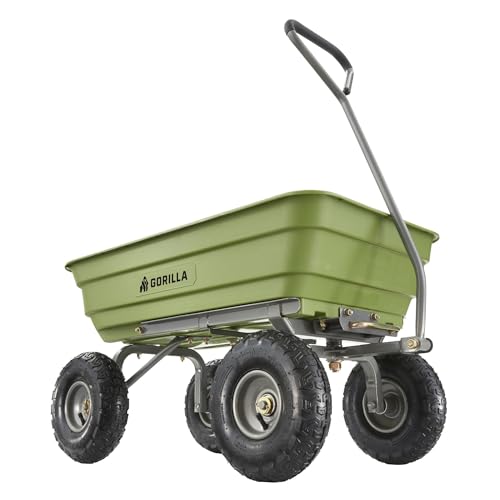
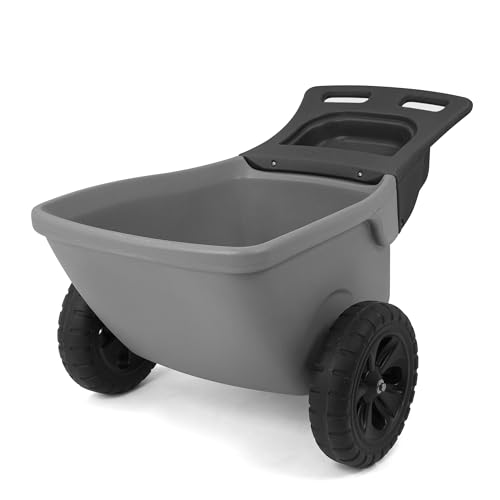
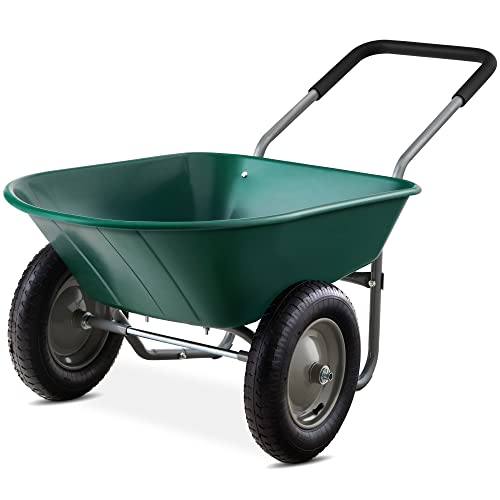
Finally, know your wheelbarrow's limits. Single wheel models steer easily and dump precisely, while two wheel models and garden carts are more stable for heavy or awkward loads.
How to Use a Wheelbarrow Step by Step
Step 1: Pick the right wheelbarrow for the job
Match the wheelbarrow to the material. A steel tray handles rocks, bricks and concrete without cracking, while a poly tray is lighter, rust free and fine for mulch, soil and leaves. Single wheel wheelbarrows turn tightly and work well on narrow paths. Dual wheel models and dump carts stay upright more easily and suit people who want extra stability.
Tray size matters too. Wheelbarrows are usually rated in cubic feet, with roughly 4 to 6 cubic feet common for home use. A larger tray is handy for bulky, light loads like leaves, but it also makes it easier to overload with heavy soil or gravel. If you mostly move dense materials, a medium tray keeps loads at a manageable weight.
Step 2: Check the condition before you start
Inspect the tire before every big job. A pneumatic tire should be firm; soft tires make pushing much harder and can slip off the rim. Check that handles are tight, the tray bolts are snug and the legs are not bent. Flat free tires remove the pressure check entirely, which is why many homeowners prefer them.
If the tire is flat, inflate it and listen for a leak before loading. A slow leak can often be fixed with a tube sealant or a new inner tube, and a worn tire can be replaced with a flat free version that bolts onto the same axle on many models. Spin the wheel by hand to make sure it turns freely without wobbling.
Step 3: Use proper posture and technique
Load the heaviest part toward the front, over or just behind the wheel, so the wheel carries most of the weight. Stand between the handles, bend your knees, keep your back straight and grip both handles evenly. Lift with your legs, not your back, and keep your arms fairly straight as you push. Look ahead, walk at a steady pace and let the wheel do the work.
To dump, stop where you want the load, lift the handles smoothly and tip the tray forward over the wheel. For loose material, a short forward push as you lift helps it slide out. Never jerk the handles or twist your torso while holding a full load.
Step 4: Load it in manageable amounts
It is tempting to fill the tray to the brim, but heavy materials like soil, gravel and wet concrete get very heavy quickly. Fill dense materials only half to two thirds full, and keep loose, light materials like leaves just below the rim. Several moderate trips are faster and safer than one overloaded trip that tips halfway across the yard.
Load in a sensible order as well. Shovel heavy material in first and keep it toward the front, then add lighter material on top. For long items like boards or branches, lay them lengthwise along the tray and keep them from sticking out past the handles, where they can catch on fences and doorways.
Step 5: Clean after use
Rinse out soil, mulch and especially concrete or mortar before it hardens. Use a stiff brush for stuck material, then let the tray drain upside down. Cleaning prevents rust on steel trays and keeps poly trays from staining and cracking.
After mixing concrete or mortar in the tray, rinse it right away while the material is still wet, and scrape any residue with a putty knife. Check for scratches in painted steel trays and touch them up with rust resistant paint so moisture cannot creep under the coating.
Step 6: Store it dry
Store the wheelbarrow under cover, either upright against a wall or tipped on its side so water cannot pool in the tray. Keep it out of direct sun when possible to protect poly trays and tires. A light coat of oil on the axle and metal parts before winter helps prevent rust.
Pro Tips for Better Results
- Balance the load: center weight side to side so the wheelbarrow does not pull toward one handle.
- Go uphill forward, downhill backward: on steep slopes, pull the wheelbarrow behind you going down so you stay in control.
- Use a tarp for loose debris: line the tray or cover the load to stop leaves and mulch from blowing out.
- Keep tires inflated: a quick top up with a bike pump makes heavy loads far easier to move.
- Use boards on soft ground: a plank path stops the wheel from sinking in wet lawns and soil.
- Stack heavy items: carry bricks or pavers stacked, not tossed, to avoid denting the tray.
If you move heavy materials often, a model rated for heavy duty use with a steel tray and a large tire makes the work noticeably easier. See our picks for the best wheelbarrow for heavy duty use.
Common Mistakes to Avoid
- Overloading: too much weight strains your back and makes tipping more likely.
- Loading the back of the tray: weight near the handles puts the load on your arms instead of the wheel.
- Lifting with your back: always bend your knees and lift with your legs.
- Turning sharply with a full load: make wide, slow turns to keep the wheelbarrow upright.
- Ignoring a soft tire: low pressure makes pushing much harder and can damage the rim.
- Leaving concrete to dry: hardened concrete is very difficult to remove and adds weight to every future load.
Another frequent mistake is pushing across a slope instead of up or down it. Side slopes shift weight to one handle and can roll the wheelbarrow over. When you cannot avoid a side slope, reduce the load and walk slowly.
Finally, avoid rushing at the end of a long day. Fatigue makes strains and spills more likely. Take short breaks, adjust your grip if you feel tension building, and stop for the day when your grip or back starts to complain.
Frequently Asked Questions
How much weight can a wheelbarrow carry?
It depends on the model. Many homeowner wheelbarrows and carts list capacities from a few hundred pounds to 1,000 pounds or more, while tray volume is usually stated in cubic feet. In practice, carry less than the maximum, especially with dense materials like gravel or wet soil, so the load stays easy to control.
Can beginners use a wheelbarrow safely?
Yes. Start with smaller loads, keep the weight over the wheel and practice lifting with your legs. A dual wheel wheelbarrow or garden cart is more stable and a good choice for beginners or older gardeners. Our picks for the best wheelbarrow for seniors focus on easy handling.
Should a wheelbarrow have one wheel or two?
One wheel is easier to steer through narrow paths and dump precisely. Two wheels are more stable, so they suit heavy loads, uneven ground and anyone worried about tipping. Many homeowners who mostly move mulch and soil on flat yards prefer the stability of two wheels.
Final Thoughts
Mastering how to use a wheelbarrow comes down to loading weight over the wheel, lifting with your legs, pushing steadily and dumping forward. Ready to upgrade? See our picks for the best wheelbarrow, check how much does a wheelbarrow cost, and compare retailers in our guide on where to buy a wheelbarrow.


