How Does a Leaf Blower Work: A Complete Guide for 2026
Disclosure: We may earn a commission when you buy through links on this page, at no extra cost to you. As an Amazon Associate I earn from qualifying purchases. Learn more

How does a leaf blower work? The parts, the airflow basics, the main types and what each one is best used for.
A leaf blower works by using a motor or engine to spin a fan, called an impeller, at high speed. The spinning fan pulls air in through an intake, compresses it inside a housing and forces it out through a narrow tube, creating a fast, focused stream of air that pushes leaves, grass clippings and dust where you want them to go. Gas, battery and corded blowers all follow this same basic principle; they simply use different power sources to turn the fan.
If you have ever wondered how does a leaf blower work in more detail, this guide walks through the main parts, the physics behind airflow and air speed, the different types you can buy and the jobs each one handles best. By the end you will understand what the numbers on the box mean and which kind of blower fits your yard.
What Is a Leaf Blower?
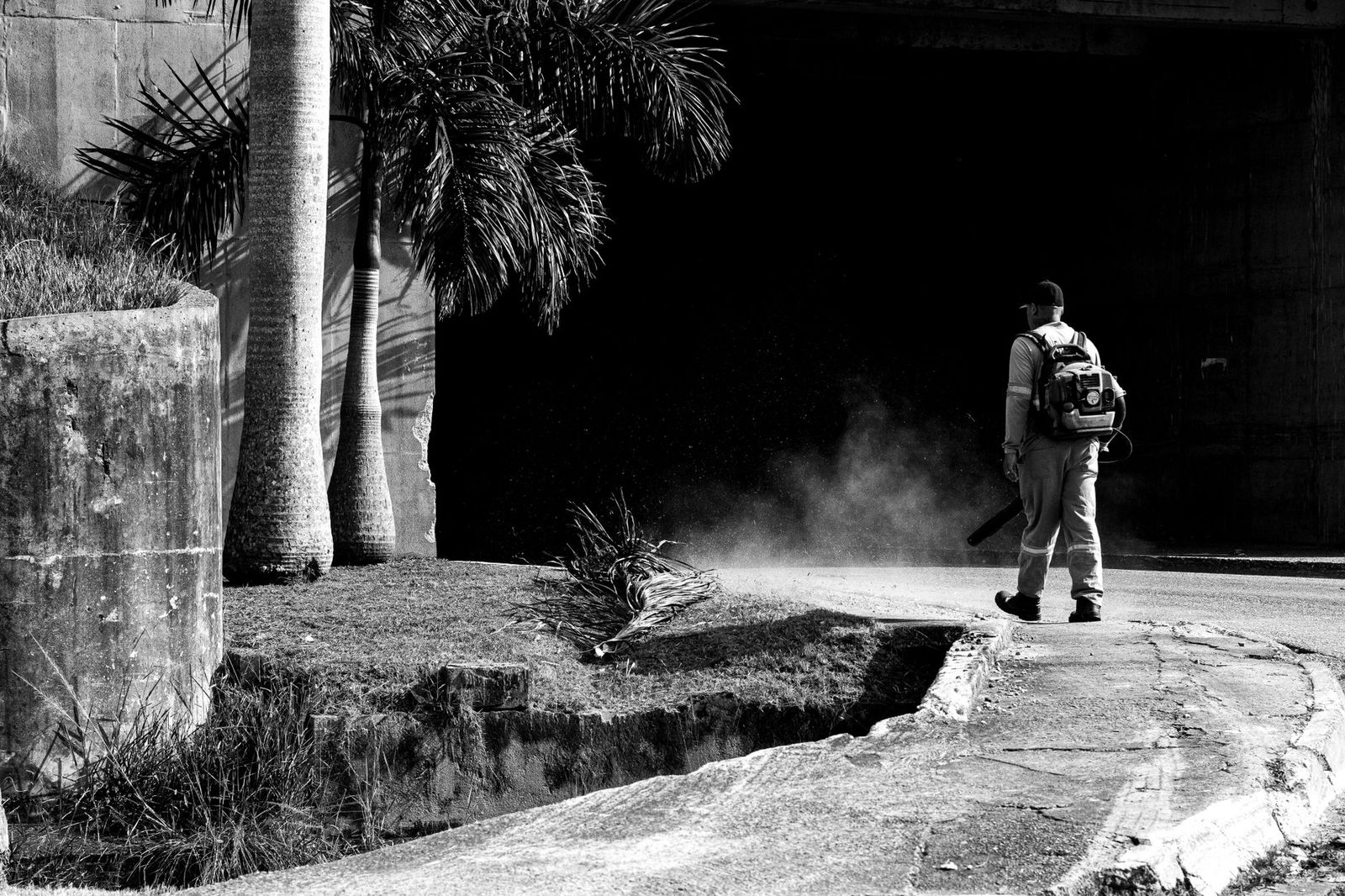
A leaf blower is a powered yard tool that moves debris with a stream of air instead of a rake or broom. You point the nozzle at leaves, clippings or dirt, and the air pushes them into a pile or off a surface. Most models are handheld, while larger ones are worn on the back like a backpack. Some are also convertible blower vacuums that can suck up leaves and shred them into a bag.
Blowers first became popular with landscapers because they cut cleanup time dramatically compared with raking. Today they are common household tools, used on lawns, driveways, patios, decks and garage floors. The basic design has stayed the same for decades, but modern versions are lighter, quieter and more efficient, and battery models have become strong enough to replace gas in many yards.
Every leaf blower is described by two key numbers. CFM, or cubic feet per minute, measures how much air it moves. MPH, or miles per hour, measures how fast that air leaves the nozzle. Together they tell you how much work a blower can do.
How Does a Leaf Blower Work?
Inside every leaf blower, a few key components work together to turn power into a stream of air.
- Power source: a small two stroke or four stroke gas engine, an electric motor plugged into an outlet, or an electric motor powered by a rechargeable battery.
- Impeller or fan: a set of blades connected to the motor shaft. Many blowers use a centrifugal impeller, while many newer battery models use an axial fan, similar to a jet engine turbine.
- Housing: a shaped plastic or metal shell around the fan that guides the air and builds pressure.
- Air intake: a vented opening, usually covered with a screen, where air enters.
- Blower tube and nozzle: the long tube that directs the air, often with a narrower tip that raises air speed.
- Controls: a trigger, throttle or speed dial, and on many models a cruise control or turbo button.
When you pull the trigger, the motor or engine spins the impeller at thousands of revolutions per minute. The blades fling air outward, which lowers the pressure near the center of the fan and draws fresh air in through the intake. The housing collects the moving air and channels it into the tube.
The tube then does an important job. As air passes into a narrower nozzle, it speeds up, the same way water sprays harder when you put your thumb over the end of a garden hose. That is why a blower can have a modest motor yet still produce air speeds of 150 MPH or more at the tip.
Centrifugal and axial designs make a tradeoff. A centrifugal impeller builds pressure well and suits blower vacuums, since the same fan can pull leaves in and shred them. An axial fan pushes air straight through the tube with less turning, which tends to move a larger volume of air more efficiently, so many high CFM battery blowers use it.
For a battery blower, the story is the same with a different power supply. So how does a cordless leaf blower work? A lithium ion battery feeds an electric motor, often a brushless one, which spins the fan. Electronics control speed and protect the battery, and features like turbo modes briefly push more current to the motor for extra force.
What Is a Leaf Blower Used For?
So what is a leaf blower used for beyond fall leaves? The short answer is any job where moving light debris with air is faster than sweeping or raking.
Flower Beds
On low speed, a blower can lift leaves out of flower beds and from around shrubs without disturbing mulch too much. Variable speed control is key here, since full power will scatter soil and mulch. Our guide to the best leaf blower for seniors includes light models with easy speed control that work well around beds.
Hills & Uneven Terrain
Raking on a slope is tiring and awkward. A blower lets you stand at the top or bottom and push leaves along the contour of the hill. Backpack models free your hands and help with balance on uneven ground.
Large Yards
On big properties, a high CFM blower moves wide piles of leaves across open lawn far faster than a rake. Many owners blow leaves onto a tarp and drag it to a compost area or curb.
Leaf & Yard Cleanup
Beyond leaves, blowers clear grass clippings after mowing, dust and dirt from garages, pine needles from patios, and debris from gutters with an extension kit. Some people use them to clear light, dry snow from steps and cars.
Small Yards
Even small yards benefit. A light corded or battery blower clears a patio, front walk or short driveway in a few minutes, and it stores easily on a shelf or hook.
Types of Leaf Blowers
Leaf blowers fall into a few main types, each with its own strengths.
Corded electric blowers plug into an outlet. They are light, affordable and never run out of power, but the cord limits range. They suit small yards and patios.
Battery blowers run on rechargeable lithium ion packs. They are quiet, easy to start and free of fumes. Small 18V and 20V models suit light chores, while 40V to 80V models rival gas power. Runtime depends on battery size and speed setting.
Gas handheld blowers use small two stroke or four stroke engines. They offer strong power and unlimited runtime with fuel, but they are louder, heavier and need maintenance.
Gas backpack blowers mount a larger engine on a harness. They deliver the highest airflow and are favored by landscapers and owners of big properties.
Blower vacuums can switch from blowing to vacuuming, often shredding leaves into a bag. They are useful for small yards and tight spaces where you want to collect debris rather than move it.
Walk behind blowers sit on wheels and move huge volumes of air, aimed at estates, parking lots and commercial grounds.
Pros and Cons
Leaf blowers have clear advantages and some real drawbacks.
- Pros: much faster than raking; less bending and twisting; useful year round for clippings, dust and patios; reaches into corners and around obstacles; battery models are quiet and low maintenance.
- Cons: gas models are loud and need fuel and upkeep; strong airflow can scatter dust and mulch; corded models are limited by the cord; batteries add cost and limit runtime; some towns restrict blower noise or use times.
For most homeowners, the time saved outweighs the downsides, especially with a quieter battery or corded model.
Is a Leaf Blower Right for You?
A leaf blower makes sense if you have trees that drop leaves, a lawn you mow often, or hard surfaces like a driveway and patio that collect debris. It is especially helpful if raking is hard on your back or shoulders. If your outdoor space is a small balcony or a paved courtyard, a broom may still be enough.
Think about yard size, noise rules in your area and how you want to power the tool. Then compare models in our guide to the best leaf blower for homeowners. If you are still unsure, our article on is a leaf blower worth it weighs the costs against the benefits.
Frequently Asked Questions
What is a leaf blower used for?
A leaf blower is used to move leaves, grass clippings, dust and other light debris with a stream of air. Homeowners use it to clear lawns, driveways, patios, decks and garage floors, and some use it with gutter kits or to brush light snow off steps. It replaces much of the raking and sweeping in a yard.
How does a cordless leaf blower work?
A cordless leaf blower uses a rechargeable lithium ion battery to power an electric motor, which spins a fan or impeller. The fan draws air in and pushes it out through a tube at high speed. Electronics manage speed settings and turbo modes, and runtime depends on battery capacity and how hard you run it.
What is a cordless leaf blower used for?
So what is a cordless leaf blower used for in practice? The same jobs as any blower: clearing leaves, clippings and dust from lawns, patios and driveways. Its advantages are freedom from cords, quiet operation and instant starting, which make it ideal for quick daily cleanups and neighborhoods with noise rules.
Is a leaf blower worth buying?
For most homes with trees, lawns or driveways, yes. A blower saves a lot of time every fall and helps with cleanup all year. Light battery and corded models cost little and need almost no maintenance. You can compare stores in our guide on where to buy a leaf blower.
How long does a leaf blower last?
A well kept leaf blower can last many seasons. Corded models have few wear parts, battery blowers usually outlast their batteries, and gas models last longest with regular filter, spark plug and fuel care. Store the blower clean and dry to extend its life.
Final Thoughts
Now you know how does a leaf blower work: a motor or engine spins a fan, the housing gathers the air, and the tube and nozzle turn it into a fast stream that pushes debris away. Match the type and power to your yard, and the job gets far easier. Ready to pick one? See our picks for the best leaf blower.