
How Does a Robot Window Cleaner Work: Expert Tips and Step by Step Guide
Disclosure: We may earn a commission when you buy through links on this page, at no extra cost to you. As an Amazon Associate I earn from qualifying purchases. Learn more

Suction, spray nozzles, sensors and safety ropes: a plain English look at how robot window cleaners clean glass and who should buy one.
How does a robot window cleaner work? It holds itself to the glass with a strong vacuum fan, then drives across the window on rotating pads or treads while spraying a fine mist of cleaning solution and wiping the surface. Sensors detect the window's edges and frame, so the robot maps the pane, follows an efficient zigzag path and stops when the glass is clean.
Most models also carry a safety rope and a backup battery that keeps suction running if the power cuts out. Below we explain the main parts, how they work together, what these robots are best used for, the different types and the honest pros and cons.

What Is a Robot Window Cleaner?
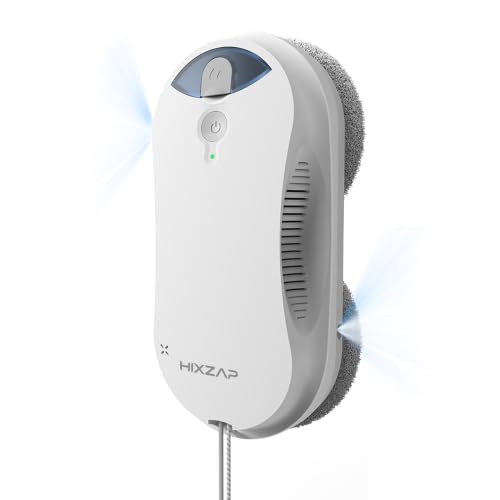
A robot window cleaner is a compact, flat device that cleans glass on its own. You place it on a window, switch it on, and it crawls across the surface, scrubbing and wiping as it goes. Unlike a floor robot, it works on vertical surfaces, so its most important job is staying firmly attached while it moves.
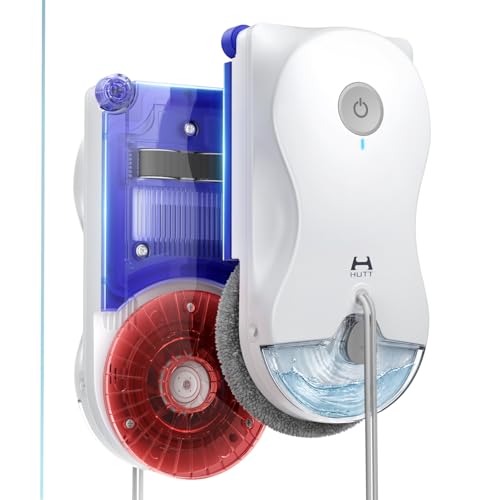
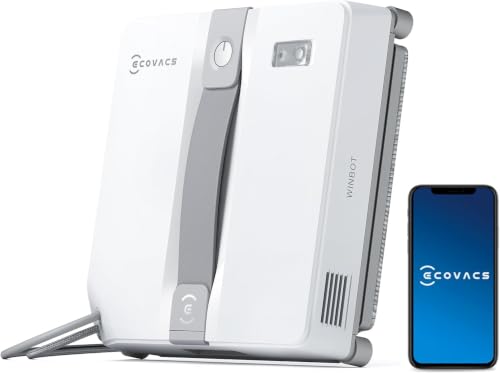
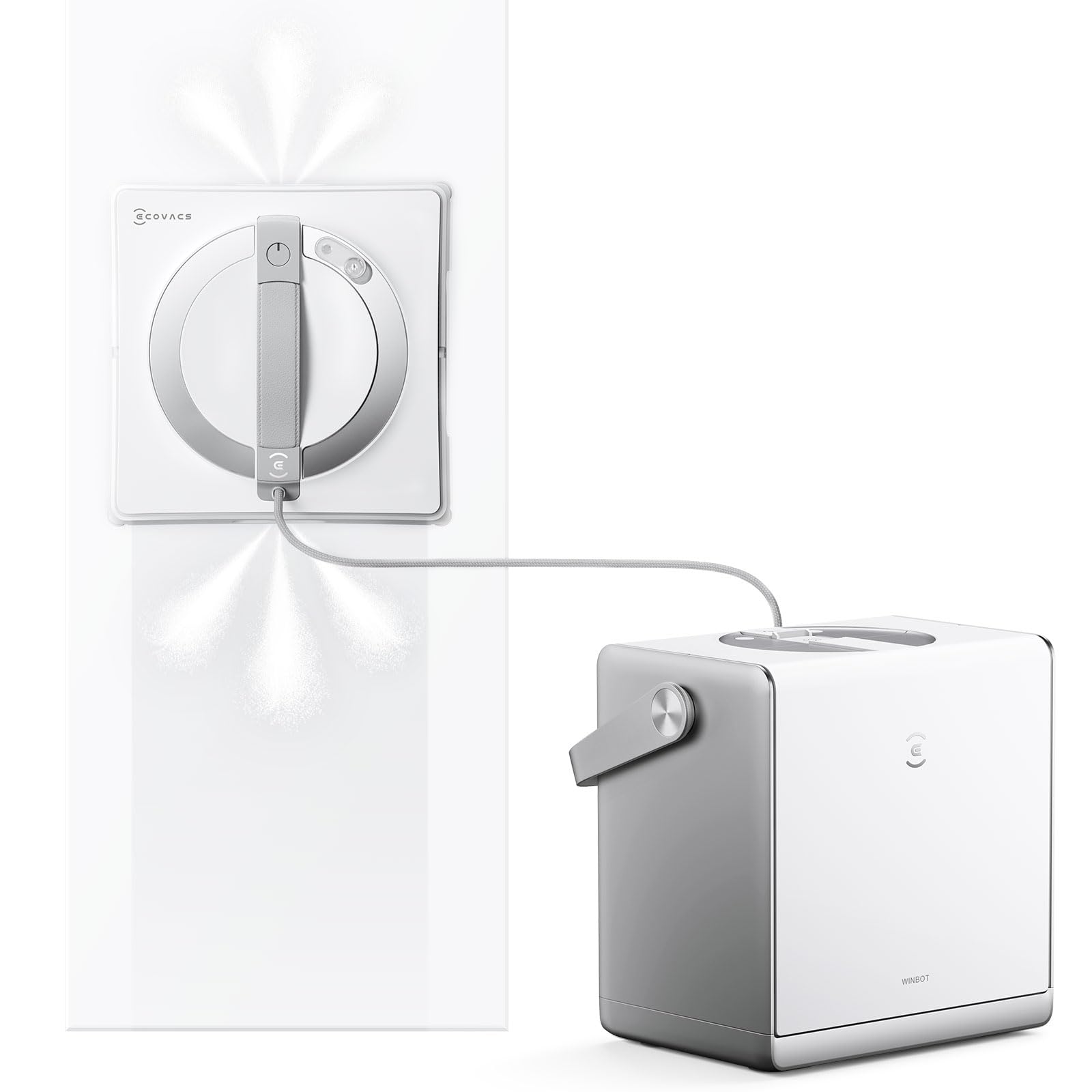
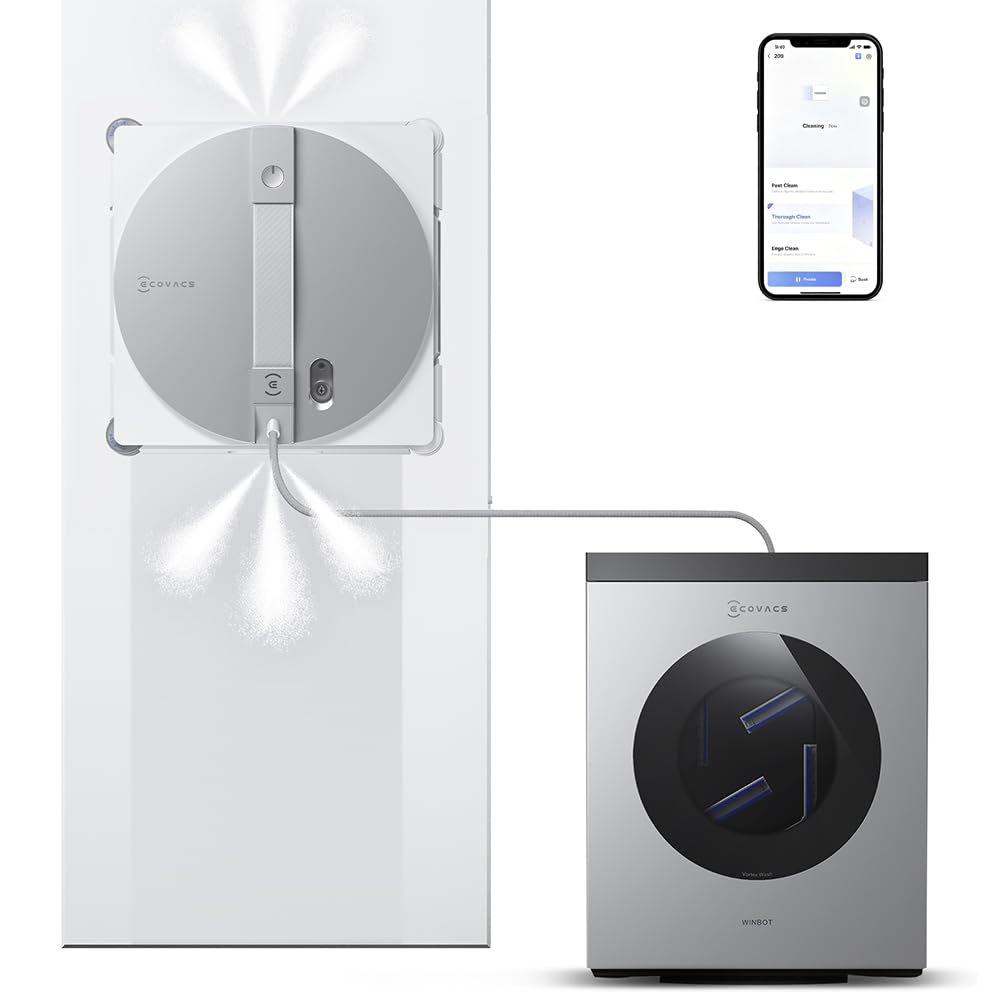
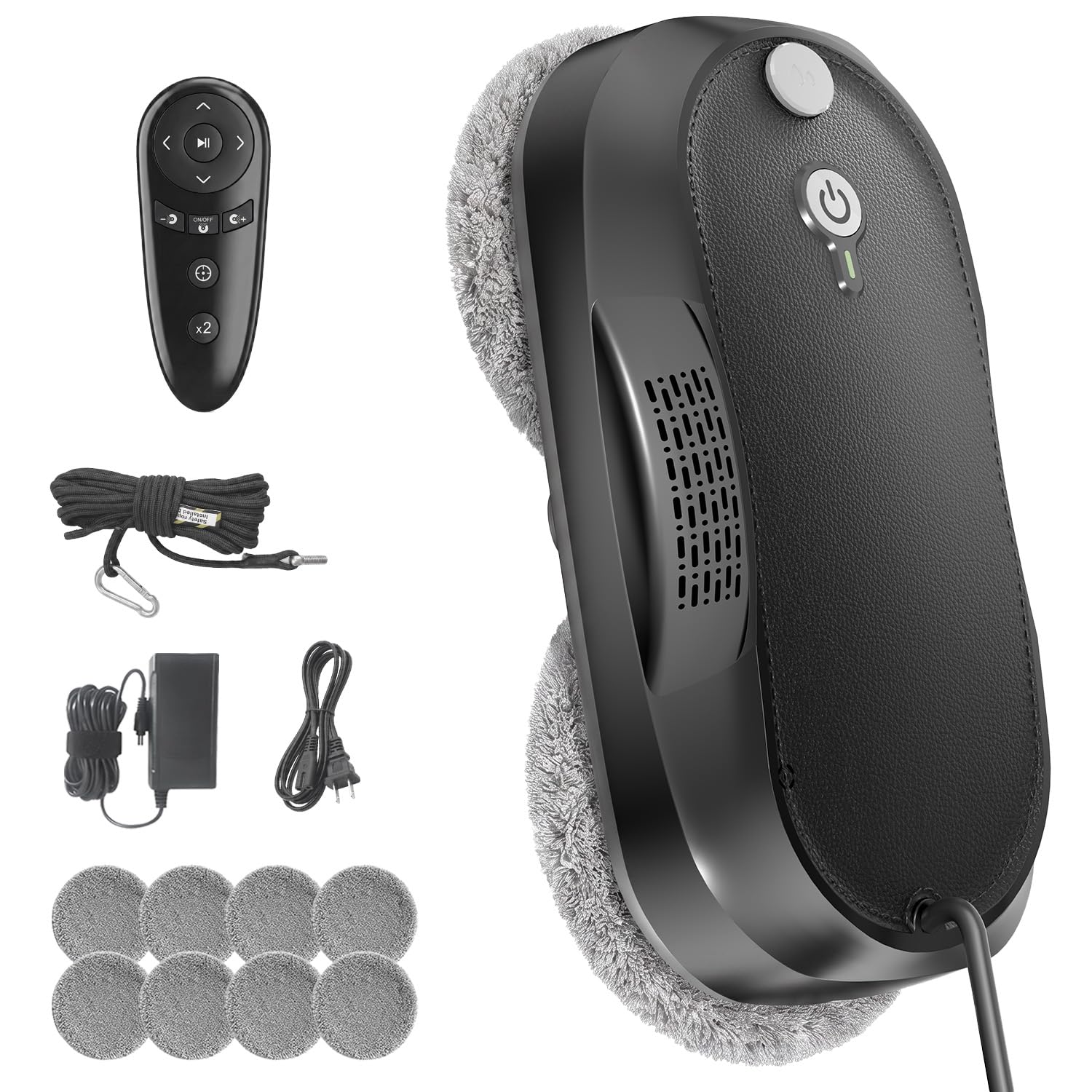
Most models are about the size of a large book and weigh only a few pounds. The HUTT 10 Premium, for example, lists a weight of 1.3kg. They plug into a wall outlet through a long power cord, and many add a small onboard battery as a safety backup. Washable microfiber pads underneath do the wiping, while a small water tank feeds spray nozzles. Some premium models, such as the ECOVACS WINBOT W2S Omni and W3 Omni, come with a multifunctional station that stores and powers the robot between jobs.
The appeal is simple: windows that are tall, wide or awkward to reach become a hands off chore. Instead of balancing on a ladder with a squeegee, you supervise while the robot works.
How Does a Robot Window Cleaner Work?
Several systems work together every second the robot is on the glass.
Suction. A vacuum fan pulls air out from under the robot, creating low pressure that presses it against the window. Suction is measured in pascals (Pa); the Tosima WA9C Pro lists 2,600 to 3,200 Pa, while the HUTT 10 Premium lists up to 6,500 Pa. Many models, the Tosima included, use an air pressure sensor to monitor that seal and react if the grip weakens.
Movement. Small motors drive rotating pads or tracks that move the robot across the glass. The HUTT pairs a round pad spinning at 70 RPM for wet scrubbing with a square pad for dry polishing.
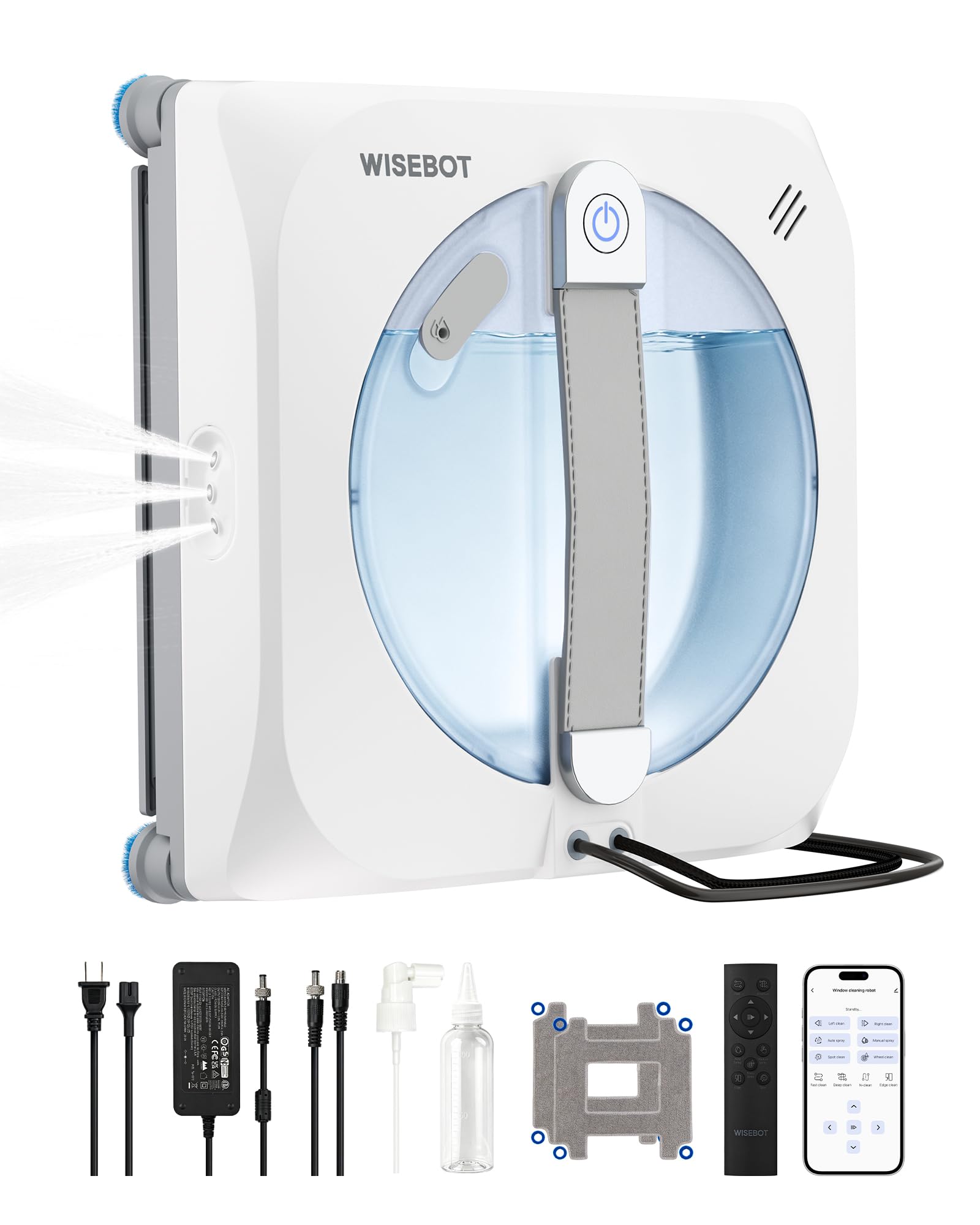
Spraying. Nozzles mist water or cleaning solution onto the glass ahead of the pads. Many models use ultrasonic spray, which turns liquid into a very fine mist for even coverage, and some, like the Tosima WA9C Pro, have four nozzles.
Navigation. Edge and drop sensors detect the frame or the edge of frameless glass. The robot measures the pane, then follows a set pattern, such as N shaped or Z shaped passes, to cover the whole surface. The HUTT's NAVI 7.0 system uses 14 sensors for edge detection and path planning.
Safety. A tether rope clips to something solid indoors, and a backup battery keeps suction running for a period if power is lost; Tosima lists up to 25 minutes and HUTT up to 30 minutes, with audible alarms.
Put together, a typical cleaning cycle runs step by step. First you attach clean pads, fill the water tank and clip the safety rope to something solid indoors. Next you power the robot on and press it to the glass, where the fan builds suction within a moment. The robot then finds the edges, measures the pane and starts its pattern, spraying ahead and wiping behind. When it has covered the whole surface, it stops and signals that it is done, so you can hold it, switch it off and lift it away.
What Is a Robot Window Cleaner Used For?
So, what is a robot window cleaner used for? The main job is cleaning windows that are hard or risky to reach by hand. Tall living room windows, picture windows, skylights you can access from inside and the outside of upper floor windows that open inward are all good candidates. The robot handles the reaching and scrubbing while you stay safely on the floor.
They are also handy for large glass surfaces that take time to clean evenly, such as sliding patio doors and glass balcony walls. Many models work on other smooth surfaces too. HUTT lists mirrors, shower doors and sliding doors, and says its robot can clean glass as small as 30 x 30 cm.
Robot window cleaners shine at regular maintenance. ECOVACS describes its WINBOT Mini as optimized for routine cleaning of dust, fingerprints and light stains, and suggests cleaning the pad or running multiple cycles on heavily soiled glass. In practice, they work best on windows cleaned often, rather than glass caked with years of grime or paint.
Types of Robot Window Cleaners
Square, tread driven robots move on tracks or belts and reach into corners well, since their square edges fit snugly against the frame. They tend to handle large, flat panes efficiently.
Round, dual pad robots use two spinning pads to scrub and move at the same time. They are agile and good at scrubbing, though round shapes can leave a small unwiped area in corners. Hybrid designs like the HUTT combine a round scrubbing pad with a square polishing pad.
Compact models, such as the ECOVACS WINBOT Mini, are lighter and suited to smaller windows and quick touch ups.
Station based models, such as the ECOVACS WINBOT W2S Omni and W3 Omni, add a multifunctional station that makes setup, storage and charging more convenient, at a higher price. For help comparing these styles, see our guide on how to choose a robot window cleaner.
Pros and Cons
- Pro: Cleans tall and hard to reach windows without ladders.
- Pro: Even, systematic coverage with less streaking than hurried hand cleaning.
- Pro: Works on mirrors, shower doors and sliding doors as well as windows.
- Pro: Saves time on large glass areas.
- Con: Slower than a skilled person with a squeegee on small windows.
- Con: Corners and edges may need a quick touch up, depending on shape.
- Con: Heavy grime may need several passes or a manual pre clean.
- Con: Needs a power outlet and careful use of the safety rope.
Is a Robot Window Cleaner Right for You?
A robot window cleaner makes sense if you have large, tall or numerous windows, glass walls or sliding doors, or if climbing ladders is unsafe or inconvenient for you. It is also a good fit for people who like to clean windows often and want consistent results with little effort.
It is less worthwhile if your home has only a few small windows you can reach easily, or if your glass has divided panes or heavy textured surfaces. In those cases, a quality squeegee and microfiber cloth may be faster and cheaper. If you decide to buy, our guide on how to use a robot window cleaner covers setup and safety.
Frequently Asked Questions
Are robot window cleaners safe on high windows?
They are designed for it, with multiple safety layers. Suction sensors detect a weak seal, backup batteries keep the robot attached during a power cut, and a tether rope catches it if it falls. Always clip the rope to something solid indoors and never use the robot on cracked or loose glass.
Is a robot window cleaner worth buying?
For homes with many large or hard to reach windows, usually yes. It saves time and removes the risk of ladder work. If you only have a few small, easy windows, a squeegee and cloth are cheaper and just as effective.
How long does a robot window cleaner last?
With good care, a robot window cleaner can last several years. Wash the pads after each use, empty and rinse the water tank, wipe the sensors and store the robot somewhere dry. Replacement pads are inexpensive and keep cleaning results consistent.
Can a robot window cleaner clean both sides of the glass?
Yes, one side at a time. You clean the inside first, then move the robot to the outside if the window opens or you can reach it safely. Always secure the safety rope inside the room when the robot works on exterior glass.
Final Thoughts
To recap how does a robot window cleaner work: a vacuum fan holds it to the glass, pads or treads move and scrub, spray nozzles mist the surface and sensors guide it edge to edge, all backed by a safety rope and battery. For specific recommendations, see our picks for the best robot window cleaner.


