
3 Best Gas Powered Hedge Trimmers for 2026 (Compared and Ranked)
Disclosure: We may earn a commission when you buy through links on this page, at no extra cost to you. As an Amazon Associate I earn from qualifying purchases. Learn more

Our picks for the best gas powered hedge trimmer, from ECHO and Husqvarna pro models to a no mixing four cycle value option.
Long privacy hedges, thick boxwood borders and overgrown shrubs at the far end of a big lot can drain a battery long before the job is done, and an extension cord simply will not reach. That is where the best gas powered hedge trimmer earns its place: it runs as long as you have fuel, cuts woody growth with steady power and goes anywhere on your property. To build this list, we compared published specs, verified owner feedback on Amazon, expert opinions and price against value for the gas models that are actually available right now.
Our three picks cover the main needs: the ECHO HC2020 as the best overall, the SENIX 4QL 22 inch as the best value thanks to its no mixing four cycle engine, and the Husqvarna 122HD60 as the runner up for long hedges. The comparison table below adds more gas models at different prices.




Our Top 3 Picks at a Glance
- Best Overall: ECHO HC2020 20" Gas Hedge Trimmer (around $400). Professional grade double sided, double reciprocating blades in a compact package built for frequent use.
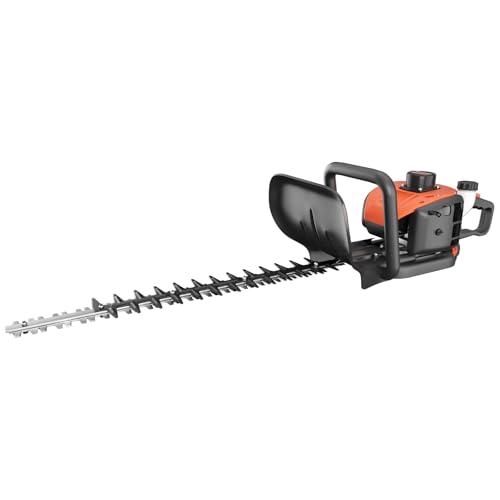
- Best Value: SENIX 4QL 26.5cc 22" Gas Hedge Trimmer (around $140). A four cycle engine that needs no fuel mixing, a rotating rear handle and a long warranty at a modest price.
- Runner Up: Husqvarna 122HD60 23.7" Gas Hedge Trimmer (around $370). A long dual action blade, Smart Start and anti vibration dampeners for big, overgrown hedges.
All three are dedicated hedge trimmers, not multi tool kits, so they balance well in the hands and are built for long sessions of shaping and cutting.
How We Chose the Best Gas Powered Hedge Trimmer
We started with gas hedge trimmers that are in stock and sold new on amazon.com, then filtered out parts, attachments and combo kits. Next we compared performance for typical home and property work: blade length, cutting capacity, engine type and handle design. Owner feedback and the volume of reviews told us how each model holds up over time. Finally, we weighed price against features, build quality and warranty, favoring brands with good parts and service support.
Gas Powered Hedge Trimmer Reviews
Here is a closer look at each pick, with key specs, strengths, weaknesses and who it suits best.
1. ECHO HC2020 20" Gas Hedge Trimmer: Best Overall
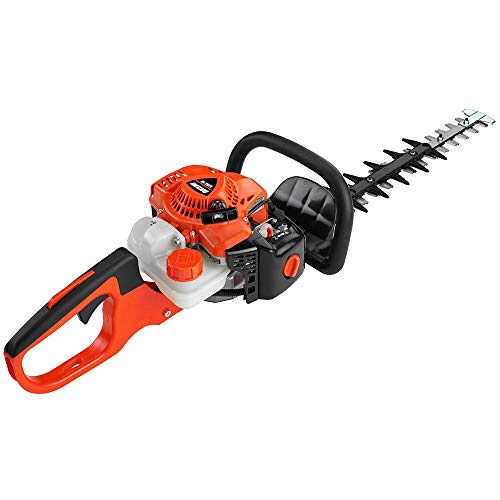
- Engine: 21.2cc two stroke
- Blade: 20 inch double sided, double reciprocating razor edge blades
- Maintenance: zero type grease fitting and tool less air filter cover
- Price: around $400
Why We Picked It
ECHO is one of the most respected names in gas outdoor power equipment, and the HC2020 shows why. Its double sided, double reciprocating blades move against each other, which reduces vibration and gives a cleaner cut than a single moving blade. ECHO also describes the blade design as having twice as many cutting edges as typical competing bush trimmers, so it bites through dense growth quickly.
The 20 inch bar is a smart middle length. It is long enough to cover wide hedges in fewer passes but short enough to stay controllable when you are working the sides or reaching over the top. Easy maintenance seals the deal: the tool less air filter cover and grease fitting make routine care quick, which matters for a gas tool you expect to use for many seasons on a large property.
Pros
- Light and compact for a gas hedge trimmer
- Professional grade build and reliability
- Double reciprocating blades cut woody growth cleanly
- Simple routine maintenance
Cons
- Noise and exhaust fumes, like any two stroke tool
- Requires mixing gas and two stroke oil
- Costs more than budget gas models
Who Should Buy It
Choose the ECHO HC2020 if you maintain long hedges or many shrubs, trim several times a season and want a gas tool that will last. It suits large properties, rural homes and anyone who already owns other two stroke equipment and is comfortable mixing fuel.
It also makes sense for buyers who want a tool that can be serviced locally. ECHO has a wide dealer network, so parts such as blades, filters and spark plugs are easy to find when the trimmer eventually needs them.
2. SENIX 4QL 26.5cc 22" Gas Hedge Trimmer: Best Value
- Engine: 26.5cc 4QL four cycle full crank engine
- Blade: 22 inch laser cut, dual action blades
- Cutting capacity: 1 1/8 inch
- Handle: rotating rear handle
- Extras: blade cover, spark plug wrench and engine oil included, three year limited warranty
- Price: around $140
Why We Picked It
Most gas hedge trimmers use two stroke engines, which means mixing oil into every tank of fuel. The SENIX 4QL skips that chore. Its four cycle engine runs on straight gasoline with oil kept in a separate crankcase, and SENIX says the design stays lubricated in any direction without stalling or leaking. For an occasional user, that removes one of the biggest hassles of owning gas equipment.
It also brings real cutting ability for the price. The 22 inch dual action blades handle branches up to 1 1/8 inch thick, and the rotating rear handle lets you turn the blade vertical for the sides of a hedge without twisting your wrists. The kit includes a blade cover, plug wrench and a bottle of engine oil, and a three year limited warranty adds peace of mind. Owner feedback is more mixed than for the ECHO and Husqvarna, which is the trade off at this price.
Pros
- Affordable entry into gas hedge trimming
- No fuel mixing thanks to the four cycle engine
- Generous cutting capacity for thick stems
- Rotating rear handle and three year warranty
Cons
- Engine oil needs periodic changes like a small mower
- Owner reviews are more mixed than for premium brands
- Not sold in California
Who Should Buy It
One practical tip: check the oil level before each session, just as you would on a lawn mower, and change it on the schedule in the manual. That small habit is the key to a long life for any four cycle engine.
The SENIX is the pick for homeowners who want gas power and runtime without paying professional prices or mixing fuel. It suits medium and large yards with hedges trimmed a few times a year, and buyers who prefer the simplicity of a four cycle engine.

3. Husqvarna 122HD60 23.7" Gas Hedge Trimmer: Runner Up
- Engine: 21.7cc two stroke
- Blade: 23.7 inch dual action
- Starting: Smart Start engine and starter, air purge, stop switch that returns to start
- Comfort: adjustable rear handle and anti vibration dampeners
- Price: around $370
Why We Picked It
Big, overgrown hedges are where the Husqvarna 122HD60 shines. Its long dual action blade covers more width with each sweep, so tall privacy screens and long borders take fewer passes. Reaching across a wide top is easier too, which cuts down on how often you need a step or platform.
Husqvarna paid attention to the usual gas complaints. Smart Start and the air purge bulb help the engine fire quickly with less pulling, and the stop switch automatically returns to the start position so the next start is easier. Anti vibration dampeners reduce strain on your hands and arms, and the adjustable rear handle helps when you switch from cutting the sides to leveling the top.
Pros
- Long blade for big hedges and wide tops
- Smart Start and air purge for easy starts
- Anti vibration dampeners and adjustable rear handle
- Trusted brand with wide parts availability
Cons
- Some vibration still comes through during long sessions
- Fuel mixing and carburetor care required
- Long blade is less nimble around small shrubs
Who Should Buy It
The longer bar does change how the trimmer handles. Around small, rounded shrubs or tight corners, a shorter blade is easier to steer, so think about the shape of your hedges before you choose. For straight runs of laurel, privet or arborvitae, the extra length is a clear advantage.
Pick the Husqvarna 122HD60 if you have long, tall or overgrown hedges and want to finish in fewer passes. It is a strong choice for large properties and for owners who value easy starting on a two stroke engine.

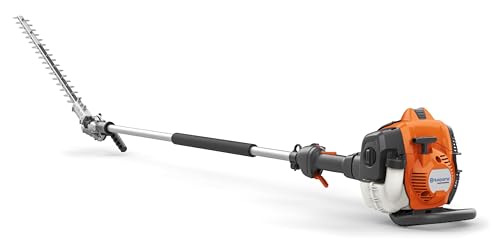
The comparison table at the top of the page also lists other gas options. Commercial models such as the ECHO HCA-2620 and ECHO SHC-225S suit heavy daily work, the Husqvarna 525HE4 adds pole reach for tall hedges, and the Husqvarna 322HD60 is another long blade choice. Lower priced gas trimmers from newer brands are available too, though they have far fewer owner reviews so far.
Why Choose Gas Power
Battery tools have improved a lot, so it is worth asking whether gas is still the right fit for you.
Power and runtime advantages
A gas hedge trimmer keeps cutting as long as there is fuel in the tank, and a refill takes seconds. That makes gas ideal for long hedges, large properties and jobs far from an outlet. Gas engines also hold their speed in thick, woody growth, which is why landscapers still rely on them. There is no battery to fade as it drains, so the last hedge of the day gets the same power as the first.
Maintenance and fuel
Gas tools ask more of you. Two stroke models need fresh fuel mixed with oil at the right ratio, and every gas trimmer needs air filter cleaning, spark plug checks and stabilized fuel for storage. Four cycle models avoid mixing but need oil changes. Plan a few minutes of care after each session, and a short service before winter storage, to keep the engine starting reliably.
Noise and emissions rules
Gas trimmers are louder than battery models and produce exhaust, so hearing protection is a must. Some cities and states restrict small gas engines or limit when they can run, and certain models cannot be sold in California. Check local rules before you buy.
How to Choose the Best Gas Powered Hedge Trimmer
These features matter most when you compare gas models.
Blade Length and Cutting Capacity
Blade length sets how much hedge you cover in each pass. Around 18 to 20 inches works for most home shrubs, while 22 to 24 inches speeds up long or tall hedges. Cutting capacity, the thickest branch the teeth can handle, matters just as much. Look for about 3/4 inch or more if your hedges have woody stems.
Single vs Dual Action Blades
Single action trimmers move one blade against a fixed one. Dual action, or double reciprocating, designs move both blades, which cuts faster, leaves a cleaner edge and reduces vibration. All three of our top picks use moving blades on both sides.
Gas, Corded or Battery
Gas is best for runtime and remote areas. Corded electric trimmers are light and cheap but tied to an outlet. A battery hedge trimmer is quiet and easy to start, and many people with average yards prefer one. Our roundup of the best hedge trimmer covers all power types, and the best hedge trimmer for backyards focuses on lighter tools for smaller spaces.
Weight and Reach
Most handheld gas trimmers weigh around 10 to 12 pounds. That feels manageable at first but adds up over an hour, especially when you hold the tool at chest height. For very tall hedges, a pole hedge trimmer adds reach so you can stay on the ground.
Rotating Handle and Ergonomics
A rotating or adjustable rear handle lets you turn the blade vertical for the sides without bending your wrist. Anti vibration systems and well placed grips reduce fatigue and make the trimmer easier to control.
Runtime and Fuel Tank
Runtime depends on tank size and engine efficiency. A larger tank means fewer refills on long hedges, while a fuel efficient engine stretches each fill. Keep a small, labeled can of premixed fuel nearby so you can top up quickly.
Safety Features
Look for a hand guard, a throttle lockout and a blade cover for storage. Easy starting systems and an automatic return stop switch also make the tool safer and less frustrating to use.
If your hedges are especially thick or neglected, our guide to the best hedge trimmer for heavy duty use covers the toughest models across every power type.
FAQs About Gas Powered Hedge Trimmers
How long does a hedge trimmer last?
A well maintained gas hedge trimmer often lasts many seasons of home use, and professional grade models can go much longer. Fresh fuel, a clean air filter, sharp blades and proper winter storage make the biggest difference. Blades are wear parts, so plan to sharpen them yearly and replace them when they become damaged.
Is a hedge trimmer worth the money?
Yes, if you have more than a few small shrubs. A hedge trimmer finishes in minutes what takes an hour with manual shears and produces a straighter, more even finish. Over a few seasons it usually costs less than hiring a landscaper for regular trims, especially on properties with long hedges.
How much should I spend on a hedge trimmer?
For gas models, expect roughly $130 to $200 for entry level trimmers and $350 to $650 for professional brands like ECHO and Husqvarna. Spend more if you trim often or have large hedges. Our guide on how much does a hedge trimmer cost breaks down every price tier.
How do I maintain a hedge trimmer?
Clean sap and clippings from the blades after every use and spray them with lubricant to prevent rust. Grease the gearbox if your model has a fitting, clean the air filter regularly and use fresh fuel. Before winter, run the tank dry or add stabilizer and store the trimmer with its blade cover on.
Final Verdict
The ECHO HC2020 is our pick for the best gas powered hedge trimmer thanks to its professional build, double reciprocating blades and easy maintenance. The SENIX 4QL is the value choice for homeowners who want gas runtime without fuel mixing, and the Husqvarna 122HD60 suits long, overgrown hedges. Check today's prices on Amazon, or see where to buy a hedge trimmer to compare stores.


