How Does a Robot Lawn Mower Work: Expert Tips and Step by Step Guide
Disclosure: We may earn a commission when you buy through links on this page, at no extra cost to you. As an Amazon Associate I earn from qualifying purchases. Learn more
How does a robot lawn mower work? Boundary wire vs RTK GPS navigation, blades, sensors, docking, uses, types and pros and cons explained.
A robot lawn mower is a small battery powered mower that cuts grass on its own. It follows a schedule set in an app, finds the edges of the lawn with a boundary wire or satellite positioning, trims a little grass each run with small spinning blades and drives itself back to a charging station when the battery runs low. So how does a robot lawn mower work day to day? Instead of one big weekly mow, it cuts often and lightly, leaving fine clippings that fall back into the lawn as natural fertilizer.
Below we explain what these machines are, the parts that make them work, what they are best used for, the main types and the pros and cons, so you can decide whether one fits your yard.
What Is a Robot Lawn Mower?
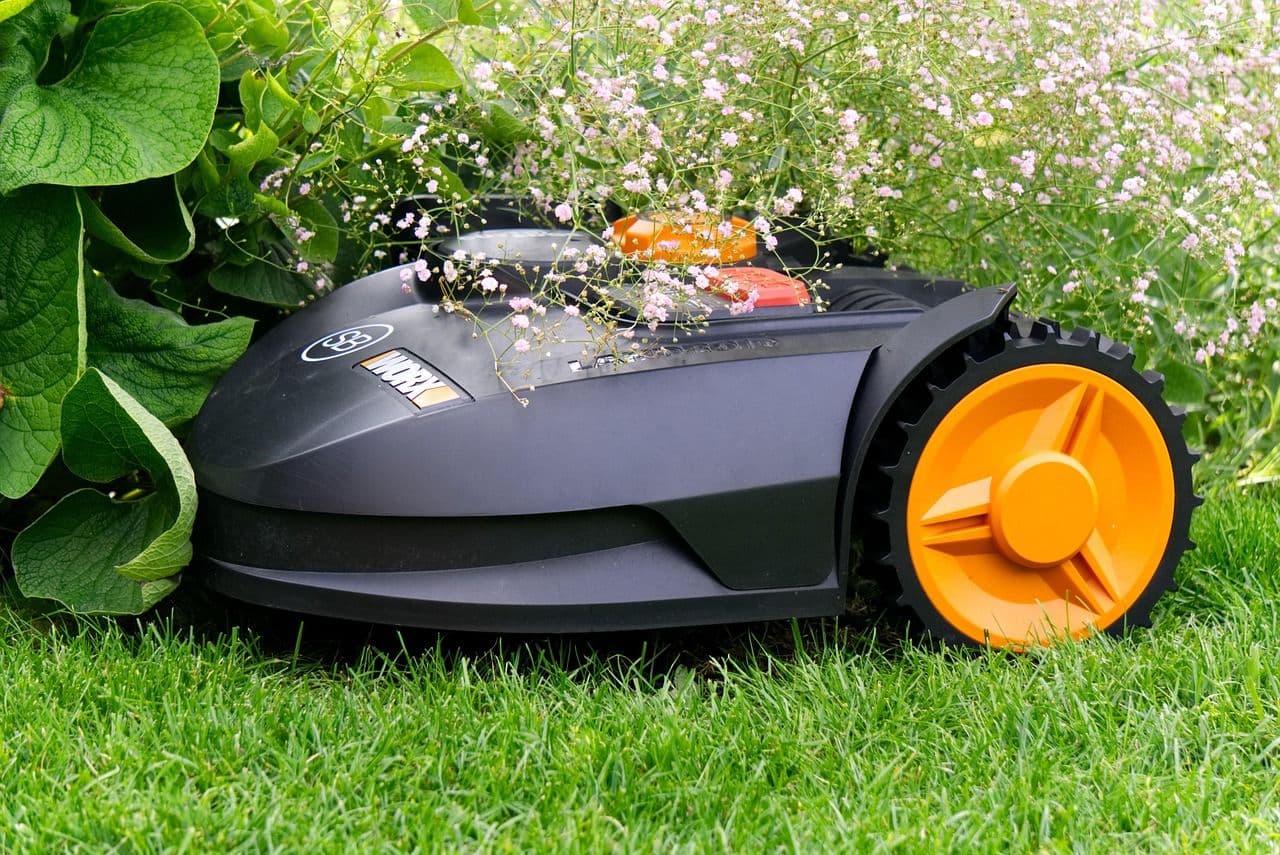
A robotic mower is an autonomous mower designed to keep grass at a steady height with almost no effort from you. It looks like a large, low robot vacuum with wheels, a protective shell and a cutting disc or blade underneath. Most models run on rechargeable lithium batteries, are quiet enough to run early in the morning or at night, and live outside on a charging dock.
The key difference from a regular mower is the cutting strategy. A push or riding mower removes a lot of grass at once, then the lawn grows for a week. A robot mower runs several times a week and only trims the tips, so the lawn always looks freshly cut. Because the clippings are tiny, there is nothing to bag or rake.
You set the schedule, cutting height and zones in an app or on a keypad. After setup, the mower handles the routine work while you only clean it, change blades occasionally and store it for winter in cold climates.
How Does a Robot Lawn Mower Work?
Several components work together to make a robot mower independent:
- Navigation and boundaries: traditional models use a thin boundary wire pegged around the edge of the lawn and around flower beds. The wire carries a low signal that the mower senses, so it turns back when it reaches the edge. Newer wire free models use RTK GPS, which combines satellite positioning with a reference antenna for accuracy within a few centimeters, and many add cameras or vision sensors to see edges and obstacles.
- Cutting system: most use a disc with small pivoting razor blades or a single blade, spinning fast to slice grass tips. Cutting height is set with a dial or in the app.
- Sensors: bump, lift and tilt sensors stop the blades if the mower hits something, is picked up or flips. Rain sensors on many models send the mower home in wet weather.
- Battery and charging station: when the charge drops, the robot follows the boundary wire or its map back to the dock, recharges and resumes.
- Brain and app: an onboard computer plans the route, either random (bouncing within the boundary) or systematic in neat lines on mapped models, while the app handles scheduling, zones and alerts.
Put together, the mower leaves the dock at the scheduled time, cuts until the battery is low, recharges and repeats until the lawn is covered.
What Is a Robot Lawn Mower Used For?
If you are wondering what is a robot lawn mower used for, the short answer is routine maintenance mowing. It keeps an established lawn neat between your own occasional edging and tidying. Here is how it handles different yards.
Hills & Uneven Terrain
Many robots handle slopes of around 20% to 35%, and all wheel drive models go steeper. Bumpy ground slows them down, so check the maker's slope rating against your yard. Our best robot lawn mower for steep hills guide covers models built for this.
Large Yards
Larger robots cover an acre or more, using bigger batteries and wider cutting discs. Several zones can be linked, though narrow passages and complex layouts may need extra wire or careful mapping.
Gardens with Beds and Obstacles
Flower beds, trees and play sets are handled by wiring around them or drawing no go zones in the app. Camera equipped models can also detect objects and steer around them.
Small Yards
Small lawns are where robots shine. Compact, affordable models cover a few thousand square feet with ease. See our best robot lawn mower for small yards picks.
Tall / Thick Grass
Robots are not built for overgrown grass. Mow the lawn short with a regular mower first, then let the robot maintain it from there.
Types of Robot Lawn Mowers
Robot mowers fall into a few groups based on how they find their way:
- Boundary wire models: the classic and most affordable type. They are reliable once set up, but laying and repairing the wire takes effort.
- RTK GPS wire free models: these use satellite positioning and an antenna station to map the lawn and mow in straight lines. They are easy to change and very precise, but need a clear view of the sky.
- Vision and camera based models: they see grass edges and obstacles with cameras and AI, sometimes combined with RTK. They are good for complex yards but can struggle in poor light.
- All wheel drive models: heavy duty robots for steep and rough terrain.
Within each group, models vary by coverage area, battery size, cutting width and smart features such as weather checks and voice assistant control. Our guide on how to choose a robot lawn mower explains how to match these to your yard.
Pros and Cons
Pros:
- Hands free mowing on a schedule
- Quiet, with no fumes
- Frequent light cuts keep the lawn thick and even
- Fine clippings feed the lawn, so no bagging
- Low running costs compared with gas
Cons:
- High upfront cost for good models
- Setup takes time, especially with boundary wire
- Still need a trimmer for edges and tight corners
- Can be stolen or damaged without anti theft features
- Not suitable for overgrown or very rough lawns
Is a Robot Lawn Mower Right for You?
A robot mower is a great fit if you have an established lawn, value your free time and prefer a quiet, tidy yard all season. It works best on lawns with clear edges, moderate slopes and manageable obstacles. If your yard is very steep, full of roots and debris, or you only want to mow occasionally, a traditional mower may make more sense. Families with young kids and pets should schedule mowing for times when the yard is empty, even though safety sensors stop the blades on contact. For a detailed cost and value breakdown, read is a robot lawn mower worth it.
Frequently Asked Questions
How does a robotic lawn mower work?
A robotic lawn mower stays inside a boundary set by a perimeter wire or by RTK GPS mapping, cuts small amounts of grass with spinning blades on a schedule and returns to its charging dock when the battery runs low. Sensors stop the blades if it is lifted, tilted or bumps into something.
What is a robot lawn mower used for?
It is used for regular maintenance mowing of established lawns. By cutting a little grass several times a week, it keeps the lawn at an even height without bagging clippings. It does not handle edging, overgrown grass or leaf cleanup, so you still need a trimmer and occasional manual work.
Do robot lawn mowers work in the rain?
Most are weather resistant and can mow in light rain, but many models have rain sensors or check the forecast through the app and return to the dock to avoid cutting wet grass. Cutting when the lawn is dry gives a cleaner result and keeps the mower and its wheels cleaner.
Is a robot lawn mower worth buying?
For many homeowners, yes. If you mow weekly, a robot can save dozens of hours each season and keeps the lawn consistently neat. Entry models are affordable for small yards, while larger and wire free models cost more. It is less worthwhile on very rough, steep or rarely mowed lawns.
How long does a robot lawn mower last?
With good care, a robot lawn mower often lasts around 6 to 10 years. The battery usually needs replacing after a few seasons, and blades need changing regularly. Cleaning the underside, storing it indoors over winter in cold climates and keeping firmware updated help it last longer.
Final Thoughts
So, how does a robot lawn mower work? It uses a boundary wire or satellite and vision navigation, small sharp blades, safety sensors and a charging dock to trim your lawn little and often on its own. For an established lawn with a clear layout, that means a neat yard with almost no effort. Ready to choose one? See our picks for the best robot lawn mower.