
The 3 Best Fertilizer Spreaders of 2026: Expert Picks and Buying Guide
Disclosure: We may earn a commission when you buy through links on this page, at no extra cost to you. As an Amazon Associate I earn from qualifying purchases. Learn more

Our best fertilizer spreader picks for big lawns, small yards and typical suburban lots, plus how to choose broadcast, drop or handheld.
A thick, green lawn depends on feeding it the right amount of fertilizer, evenly, at the right time of year. Spread it by hand and you get the familiar striped look: dark green bands where granules landed heavily and pale strips where they missed. Worse, uneven application can burn patches of grass or waste expensive product on driveways and flower beds. The best fertilizer spreader solves that by metering product at a steady rate and throwing it in a consistent pattern, so every square foot gets what it needs.
There are more choices than most homeowners expect: compact broadcast spreaders for small yards, larger push models for half an acre or more, commercial grade machines with pneumatic tires, tow behind units for riding mowers and battery powered handhelds for touch ups. To narrow them down, we compared manufacturer specifications, the feedback of verified owners on Amazon, expert lawn care advice and the price of each spreader against the lawn it can cover. Only current models in stock on Amazon made the cut. Our three picks: a commercial grade EarthWay for medium and large lawns, a pre calibrated Scotts Mini for small yards and the popular Scotts EdgeGuard DLX for typical suburban lots.



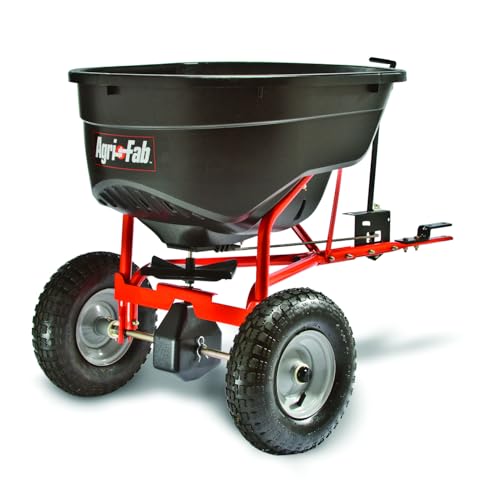

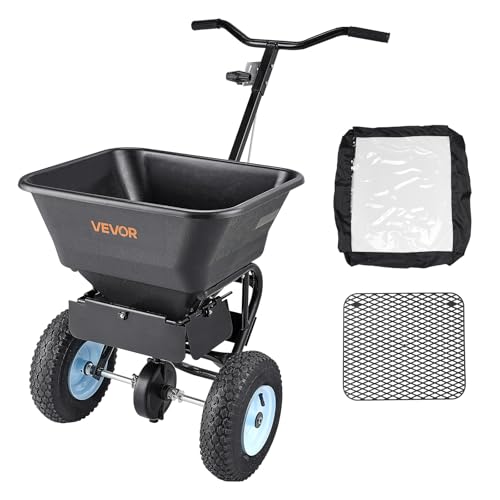
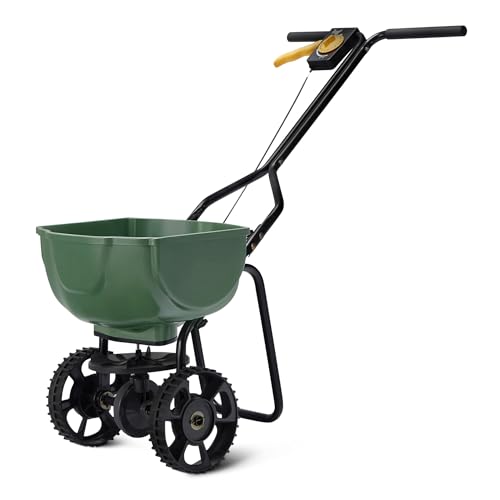

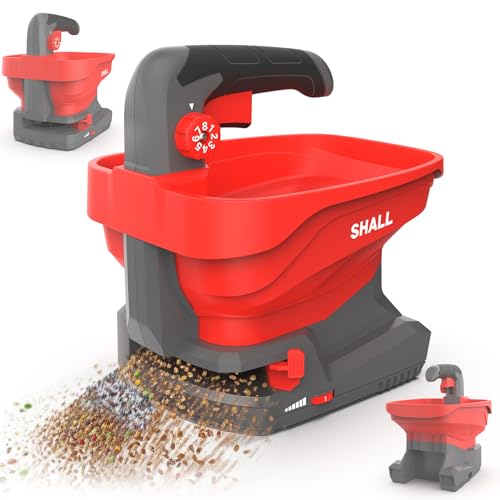

Our Top 3 Picks at a Glance
If you want the quick answer to what is the best fertilizer spreader for your lawn, start with the picks below. Lawn size is the deciding factor.
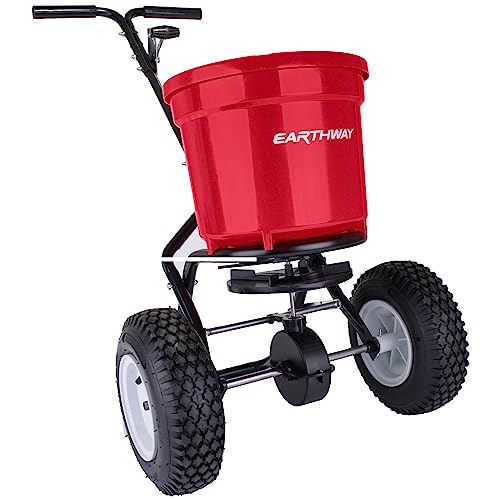
- Best Overall: EarthWay 2150 Commercial Broadcast Spreader (around $280). A 50 pound hopper, 13 inch pneumatic tires, a clog free grate and a fully enclosed gearbox for fast, even coverage on bigger lawns.
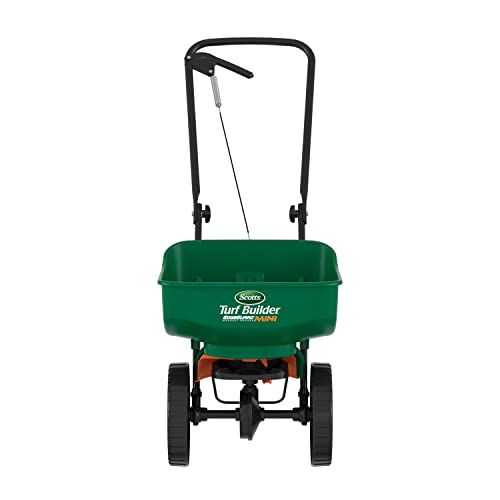
- Best Value: Scotts Turf Builder EdgeGuard Mini Broadcast Spreader (around $57). Pre calibrated, ready to use, holds enough product for up to 5,000 square feet and folds for storage.
- Runner Up: Scotts Turf Builder EdgeGuard DLX Broadcast Spreader (around $90). Holds product for up to 15,000 square feet, with EdgeGuard to keep granules off beds and walkways.
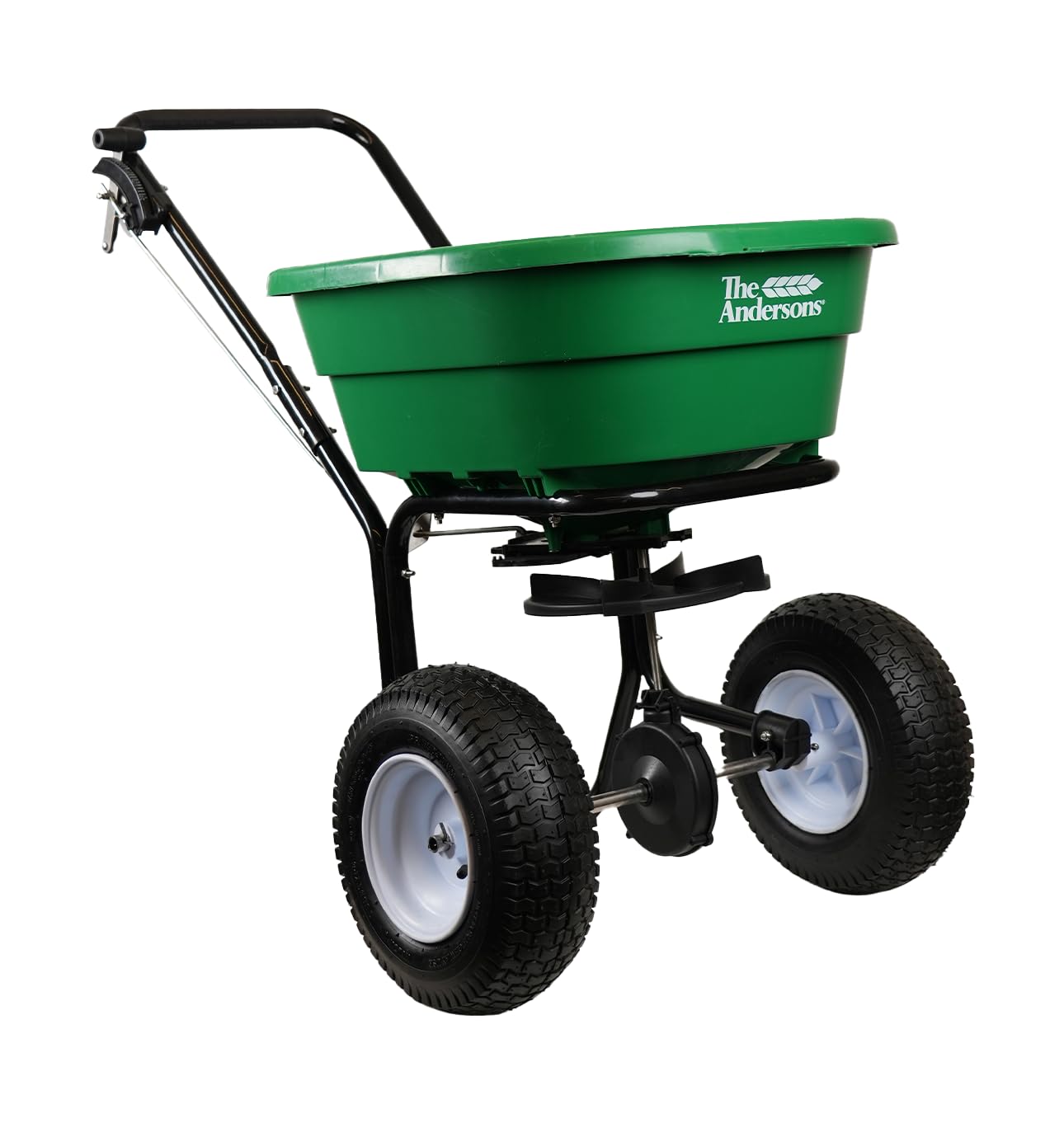
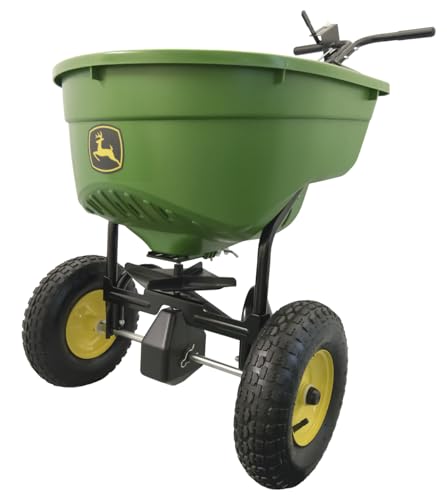
The product table above also lists more push, tow behind and handheld spreaders from Lesco, The Andersons, Agri-Fab, John Deere, EarthWay, VEVOR, Amazon Basics, WORKPRO, SHALL and Scotts.
How We Chose the Best Fertilizer Spreader
A spreader has one job, to apply product evenly, so we focused on what affects accuracy: the metering system, spread pattern controls, edge control and how well the hopper keeps product flowing. Capacity and wheel design came next, since a larger hopper means fewer refills and bigger wheels roll more smoothly over bumpy lawns. We also looked at build quality, gearbox design and resistance to rust from fertilizer and salt.
Owner feedback rounded out the comparison. Spreaders that are well reviewed by a large base of homeowners over several seasons ranked higher. We weighed price against capacity and durability, considered warranty and support, and confirmed that each pick is a current model in stock on amazon.com.
Fertilizer Spreader Reviews
1. EarthWay 2150 Commercial Broadcast Spreader: Best Overall
- Type: walk behind broadcast spreader, commercial grade
- Hopper: 50 pound capacity with a removable clog free grate
- Tires: 13 inch high flotation pneumatic stud tires on rustproof poly rims
- Spreading: 3 hole drop system with side spread control and adjustable drop rate
- Gearbox: fully enclosed for clog free use, even in damp conditions
- Support: one year limited warranty and lifetime technical support
Why We Picked It
For medium to large lawns where you want fast, even coverage, a sturdier spreader pays off. The EarthWay 2150 is built to commercial standards, with a 50 pound hopper that holds enough product to treat a large area without stopping to refill. Its 13 inch high flotation pneumatic tires glide over rough, uneven patches of lawn, which keeps the spread pattern steady rather than bouncing granules around.
Accuracy is where it shines. EarthWay's 3 hole drop system, combined with side spread control, promotes an even pattern with feathered edges, so overlapping passes blend instead of leaving stripes. You can adjust the drop rate directly on the spreader, and the side spread control helps keep product off sidewalks, driveways and garden beds. A clog free grate separates large clumps before they jam the hopper, and it slides out when you do not need it.
Durability is another reason it stands out. The fully enclosed gearbox protects the moving parts from dust, fertilizer and moisture, so it keeps working smoothly even in damp conditions. Rustproof poly rims add to its lifespan. For homeowners who want the best heavy duty fertilizer spreader without stepping up to tow behind equipment, the 2150 is a strong choice.
It is also versatile across the seasons. Use it for grass seed in early fall, fertilizer in spring and summer, and many owners use spreaders like this for ice melt on long driveways in winter. A single, durable spreader that handles all of those jobs is worth the extra investment.
Pros
- Fast, even coverage on large lawns
- Large 50 pound hopper
- Pneumatic tires roll easily over rough ground
- Enclosed gearbox resists clogs and corrosion
- Adjustable drop rate and side spread control
Cons
- Pricier than consumer broadcast spreaders
- Larger to store than compact models
- Settings take some practice to dial in for each product
Who Should Buy It
Choose the EarthWay 2150 if you have a large or uneven lawn, apply products several times a year and want a spreader that will last for many seasons. At around $280, it is an investment, but it delivers commercial grade accuracy and durability.

2. Scotts Turf Builder EdgeGuard Mini Broadcast Spreader: Best Value
- Capacity: holds up to 5,000 square feet of Scotts lawn products
- Setup: no assembly required; pre calibrated and ready to use
- Edge control: Scotts EdgeGuard Technology side shield
- Flow: hopper and agitator for smooth funneling and consistent coverage
- Storage: fold down handle
- Uses: fertilizer, grass seed, salt and ice melt
Why We Picked It
Small lawns and townhome yards do not need a big, expensive spreader. They need something simple, accurate and easy to store. The Scotts EdgeGuard Mini delivers exactly that. It comes pre calibrated and ready to use with no assembly, so you can take it out of the box, set the dial to the number on the bag of Scotts product and start spreading.
The hopper holds enough product to cover up to 5,000 square feet, which is plenty for most small front and back yards. A hopper and agitator keep product flowing smoothly for consistent coverage. Scotts' EdgeGuard Technology adds a side shield that keeps fertilizer off landscaping, driveways and sidewalks when you make passes along the edges, which reduces waste and prevents stains on concrete.
The fold down handle makes it easy to hang on a wall or tuck into a small shed or closet. It also works year round: use it for grass seed, lawn food and even salt or ice melt on walkways in winter. For buyers looking for the best compact fertilizer spreader or simply the most budget friendly way to feed a small lawn, it is hard to beat. Our guide to the best fertilizer spreader for small yards covers more options in this size range.
Getting good results with a small spreader is mostly about technique. Start by making a header strip around the edge of the lawn with EdgeGuard engaged, then fill in the middle with straight, slightly overlapping passes. Close the hopper whenever you stop or turn so product does not pile up in one spot. That simple routine prevents the dark green circles and pale stripes that come from careless spreading.
Pros
- Cheap and compact
- Pre calibrated, no assembly
- EdgeGuard keeps product off beds and walkways
- Easy storage with folding handle
- Massive base of owner reviews
Cons
- Small hopper for larger lawns
- Small wheels on rough ground
- Calibrated mainly for Scotts products
Who Should Buy It
Pick the Mini if you have a small lawn, limited storage space and mostly use Scotts products. At around $57, it is the best value spreader for townhomes, small suburban lots and first time lawn care.

3. Scotts Turf Builder EdgeGuard DLX Broadcast Spreader: Runner Up
- Type: broadcast spreader
- Capacity: holds up to 15,000 square feet of Scotts lawn products
- Edge control: EdgeGuard Technology side shield
- Setup: no assembly required; pre calibrated
- Flow: hopper and agitator for consistent coverage
- Uses: fertilizer, grass seed, salt and ice melt
Why We Picked It
For most suburban lawns, the EdgeGuard DLX hits the sweet spot between capacity, price and ease of use. It is a beginner friendly push spreader that comes pre calibrated and ready to go, so there is no guesswork when you pair it with Scotts lawn products. Just set the dial to the number listed on the bag and walk at a steady pace.
The larger hopper holds product for up to 15,000 square feet, three times the Mini, which means a typical quarter acre lot can be fed with a single fill. EdgeGuard border control keeps product off flower beds, driveways and sidewalks along the edges, a common problem with basic broadcast spreaders. The hopper and agitator keep granules flowing smoothly for even coverage.
Like the Mini, it works year round with grass seed, fertilizer, salt and ice melt. It is a popular choice with homeowners because it simply works without fuss, and it has a very large base of owner reviews. For anyone wanting the best easy to use fertilizer spreader for a medium lawn, it is a smart pick. For more guidance on choosing by lawn size, see our guide to the best fertilizer spreader for homeowners.
The DLX also suits homeowners who follow a seasonal lawn program. Four or five feedings a year, plus overseeding in fall and ice melt in winter, put a lot of passes on a spreader. A pre calibrated model removes the guesswork each time, and the larger hopper means each application is a short, single fill job rather than a stop and start chore.
Pros
- Very easy for beginners
- EdgeGuard keeps product off beds and walks
- Covers up to 15,000 square feet per fill
- Pre calibrated for Scotts products
- Huge base of owner reviews
Cons
- Lighter duty build than commercial spreaders
- Not ideal for rough or very bumpy terrain
- Settings for non Scotts products need testing
Who Should Buy It
Buy the DLX if you have a typical suburban lawn up to about a third of an acre and want an easy, reliable spreader for Scotts products. At around $90, it is a step up from the Mini without the cost of a commercial unit.

Who Should Buy a Fertilizer Spreader (and Who Should Not)
A spreader makes sense for almost anyone who applies lawn products more than once a year. You will get the most value if you:
- Fertilize your lawn in spring, summer and fall.
- Overseed bare or thin patches.
- Apply weed and feed or crabgrass preventer.
- Spread ice melt or salt on long driveways and walkways in winter.
- Want to save money by doing lawn care yourself instead of hiring a service.
Choose the size based on your lawn. Small yards under about 5,000 square feet are well served by compact broadcast or handheld spreaders. Typical suburban lawns benefit from mid size push spreaders, while large properties and acreage call for commercial push or tow behind models.
On the other hand, if your lawn is tiny or you only treat a few spots, a handheld spreader or shaker may be enough. And if you use a lawn care service that applies products for you, there is little reason to own a spreader beyond ice melt duty. For a full breakdown of what each type costs, see our guide on how much does a fertilizer spreader cost.
Timing matters as much as the tool. Most cool season lawns benefit from feeding in early fall and again in spring, while warm season grasses prefer late spring and summer feedings. Apply granular products to dry grass, then water as the label directs. A spreader makes it easy to follow those schedules precisely, which is where the real payoff in lawn health comes from.
Safety is part of owning one, too. Wear gloves when handling fertilizer and weed control products, keep children and pets off treated areas for the time listed on the bag and sweep any stray granules off hard surfaces back onto the lawn so they do not wash into storm drains.
How to Choose the Best Fertilizer Spreader
Use the factors below to choose the best fertilizer spreader for your lawn size, terrain and budget.
Broadcast vs Drop vs Handheld
Broadcast spreaders throw granules in a wide arc, covering large areas quickly. They are the most popular choice for lawns. Drop spreaders release product straight down between the wheels, giving precise placement near beds and edges but taking longer to cover big areas. Handheld spreaders are small, cheap and great for touch ups, small yards and ice melt on steps.
Some homeowners own two types for this reason. A broadcast spreader handles the open lawn quickly, while a drop spreader or handheld model takes care of narrow side yards, strips along beds and areas near ponds or vegetable gardens where you do not want granules flying. If you can only buy one, a broadcast spreader with an edge guard covers the widest range of jobs.
Hopper Capacity
Capacity is listed by weight or by the square footage of product the hopper holds. Small spreaders cover around 5,000 square feet, mid size models about 15,000 and commercial units can hold 50 to 130 pounds or more. A larger hopper means fewer refills but a heavier spreader when full.
Coverage Area
Match coverage to your lawn size. Measure your lawn or estimate it from property maps, then choose a spreader that can cover it with one or two fills. Remember that wider spread patterns cover more ground per pass but need careful overlap to avoid stripes.
A practical pattern helps any spreader. Many lawn pros apply half the recommended rate in one direction and the other half at a right angle, which evens out any gaps. Walking at a steady, normal pace also matters, because broadcast spreaders throw farther when you walk faster. Check the bag for recommended settings and spread widths before you begin.
Edge Guard and Calibration
Edge guards and side spread controls stop product from landing on driveways, sidewalks and garden beds. That saves money and prevents fertilizer stains on concrete. Calibration matters too: pre calibrated spreaders with product settings printed on the bag make it easy to apply the right amount. Commercial models may need you to calibrate for each product.
Wheels and Frame
Large pneumatic tires roll smoothly over bumpy lawns and keep the spread pattern even. Small plastic wheels are fine on smooth, level lawns. Steel frames with protective coatings and rustproof hoppers resist corrosion from fertilizer and salt. Enclosed gearboxes protect moving parts and last longer. For buyers comparing the best durable fertilizer spreader options, frame and gearbox quality matter most.
Handle design is easy to overlook. A comfortable, adjustable handle with the flow control lever close to your hand lets you open and close the hopper without breaking stride, which keeps edges and turns neat. Folding handles help with storage in small sheds and garages.
Battery Powered Options
Battery powered spreaders use a small motor to spin the spreading disc, which makes spreading more consistent than hand cranking. Handheld battery models are light and great for small yards and walkways, while some larger spreaders mount on ATVs or UTVs. If you want the best electric fertilizer spreader for a small yard, a handheld battery model is an easy upgrade over a manual shaker.
FAQs About Fertilizer Spreaders
How long does a fertilizer spreader last?
A good spreader often lasts many seasons with care. Consumer models with plastic gears may wear sooner, while commercial units with enclosed gearboxes and steel frames can last a decade or more. Rinsing off fertilizer and salt after each use, drying the spreader and storing it out of the weather are the keys to a long life.
Is a fertilizer spreader worth the money?
Yes. A spreader applies product far more evenly than spreading by hand, which prevents burned patches, stripes and wasted fertilizer. It also saves time and lets you apply seed, weed control and ice melt with one tool. Most homeowners recover the cost quickly through better results and less wasted product.
How much should I spend on a fertilizer spreader?
Handheld spreaders cost around $15 to $60. Compact and mid size broadcast spreaders typically cost $50 to $120. Commercial grade push spreaders and tow behind models range from about $170 to $300, and professional units can cost more. If you want the best affordable fertilizer spreader, a compact broadcast model is the best place to start.
How do I maintain a fertilizer spreader?
Empty the hopper after every use; never leave fertilizer or salt sitting in it. Rinse the spreader with a hose, paying attention to the gears, spinner and wheels, then let it dry completely. Lightly lubricate moving parts as the manual recommends, check tire pressure on pneumatic models and store the spreader indoors.
Final Verdict
For medium to large lawns, the best fertilizer spreader is the EarthWay 2150 Commercial. Its 50 pound hopper, pneumatic tires, enclosed gearbox and adjustable drop rate deliver fast, even coverage season after season. For small yards, the Scotts EdgeGuard Mini is the best value, with pre calibrated settings and easy storage. And for typical suburban lawns, the Scotts EdgeGuard DLX is an easy, reliable choice that covers up to 15,000 square feet per fill. Not sure where to shop? See where to buy a fertilizer spreader, then check today's price on Amazon before you buy.


