
3 Best Pole Saws for Heavy Duty Use for 2026 (Compared and Ranked)
Disclosure: We may earn a commission when you buy through links on this page, at no extra cost to you. As an Amazon Associate I earn from qualifying purchases. Learn more

Gas and brushless models that cut thick limbs all day: our picks for the best pole saw for heavy duty use, from ECHO and Makita.
Overgrown oaks, storm damaged limbs and a long row of trees along the fence line will wear out a light homeowner pole saw in a single afternoon. Thick wood binds weak motors, flimsy shafts flex at full reach, and small batteries die halfway through the job. If you cut a lot of limbs every season, the best pole saw for heavy duty use needs a strong engine or brushless motor, a 10 to 12 inch bar and a shaft that stays steady overhead.
We built this list from manufacturer specs, owner feedback on Amazon, expert guidance on tree pruning and price against value. Our three picks are two professional grade ECHO gas pole saws with 25.4cc engines and a Makita 36V brushless model that claims the cutting power of a 30cc gas unit.






Our Top 3 Picks at a Glance
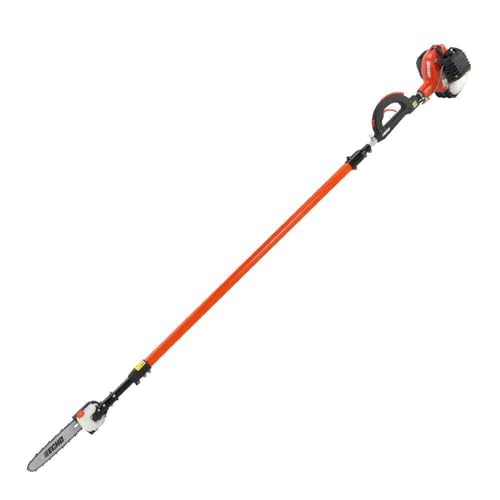
- Best Overall: ECHO 12 in. 25.4cc Telescoping In-Line Handle Pole Pruner (around $700). A professional grade engine, a large fuel tank and an in-line handle for long days of cutting.
- Best Cordless Pick: Makita XAU02ZB 36V LXT Brushless 10 in. Telescoping Pole Saw (around $660). Gas class cutting power with no fuel mixing, plus a torque boost mode for hard wood.
- Runner Up: ECHO PPT-2620 12 in. 25.4cc Telescoping Power Pole Saw (around $680). The same engine class with a loop handle and a shaft that extends to 12.1 feet.
How We Chose the Best Pole Saw for Heavy Duty Use
We looked for saws that can handle frequent, demanding work: engine size or motor output, bar length, reach, oiling system and how the tool holds up over many seasons. We then weighed owner feedback and review volume, price against features, warranty support and whether each model is currently sold new on amazon.com.
Pole Saw for Heavy Duty Use Reviews
1. ECHO 12 in. 25.4cc Telescoping In-Line Handle Pole Pruner: Best Overall
- 25.4cc professional grade 2 stroke engine
- 12 inch bar
- Telescoping shaft
- Large 20.6 fl. oz. fuel tank
- Rubber rear grip with an in-line, trimmer style handle
- Automatic, adjustable oiler
Why We Picked It
Heavy duty cutting comes down to power and endurance, and this ECHO delivers both. The 25.4cc professional grade engine pulls a 12 inch bar through thick limbs that would stall most battery saws, and the 20.6 ounce fuel tank lets you keep working across a big lot without frequent refills.
The in-line handle is the detail that sets it apart from the loop handle version. Your hands sit along the shaft like they would on a string trimmer, which many landscapers find easier to control when the saw is held at an angle for long periods. The automatic, adjustable oiler lets you add more oil to the chain on hard, sappy wood and less on light pruning days.
Pros
- Strong professional grade engine for thick limbs
- Large fuel tank for long sessions
- Adjustable oiler protects the bar and chain
Cons
- Smaller owner review base than the loop handle model
- Requires mixed fuel and regular engine care
Who Should Buy It
Choose this ECHO if you clear storm damage, maintain wooded acreage or trim trees for a living and want a gas saw built for daily use. Expect to pay around $700.

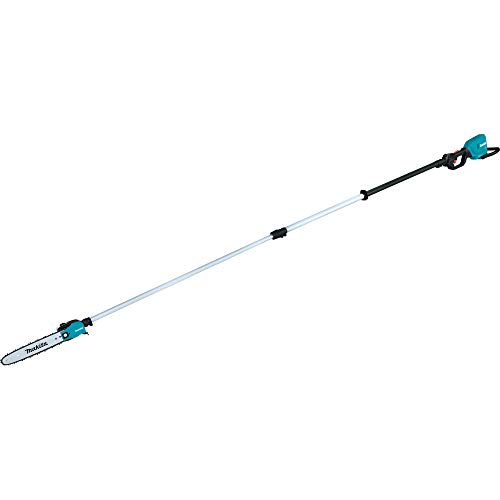
2. Makita XAU02ZB 36V LXT Brushless 10 in. Telescoping Pole Saw: Best Cordless Pick
- 36V system that runs on two 18V LXT batteries (tool only, batteries not included)
- Brushless motor rated to deliver the power of a 30cc gas pole saw
- 10 inch bar
- Telescoping shaft adjusts from 9 to 13 feet
- Torque boost mode for thick or hard branches
Why We Picked It
Many buyers want heavy duty performance without the noise, fumes and pull starts of a gas engine. Makita says this brushless motor delivers the power of a 30cc gas pole saw and cuts 20% faster than a 31.4cc gas model, which puts it in a different class from typical 20V or 40V homeowner saws.
Runtime is solid too. Makita rates it for up to 140 cuts in 4x4 cedar with two 18V LXT 5.0Ah batteries, and the torque boost mode adds force when you hit a dense limb. The 9 to 13 foot telescoping shaft gives you real overhead reach for high canopy work.
Pros
- Gas class power with instant starts
- Quiet and no fuel mixing
- Uses common Makita 18V LXT batteries
Cons
- Batteries and charger cost extra
- Shorter bar than the ECHO gas models
Who Should Buy It
This is the right pick for crews and homeowners already invested in Makita LXT batteries, or anyone who works near homes where noise matters. Plan on around $660 for the bare tool.
3. ECHO PPT-2620 12 in. 25.4cc Telescoping Power Pole Saw: Runner Up
- 25.4cc gas 2 stroke X Series engine
- 12 inch bar
- Loop handle
- Telescoping shaft that extends to 12.1 feet
Why We Picked It
The PPT-2620 is a popular choice for heavy trimming of high, thick limbs. It shares the 25.4cc engine size and 12 inch bar of our top pick, so cutting power is on the same level, but it uses a loop handle that some users prefer when they swing the saw from side to side.
The telescoping shaft reaches 12.1 feet, enough for most residential trees from the ground. As part of the X Series line, it is aimed at professionals and serious homeowners rather than casual users, and it has a larger base of owner reviews than the in-line version.
Pros
- Professional grade power and reach
- Loop handle gives a familiar grip
- No battery runtime limits
Cons
- Heavier than battery saws at full extension
- Noise and fuel mixing
Who Should Buy It
Pick this one if you prefer a loop handle and want a proven gas pole saw for regular cleanup of large trees. It sells for around $680.

What Heavy Duty Use Really Means
Commercial grade components
A heavy duty pole saw uses parts meant for many hours of work each week: professional grade engines or brushless motors, sturdy shafts and reliable oilers. Light homeowner models are fine for a few cuts a year but wear quickly under daily loads.
Duty cycle and cooling
Long cutting sessions create heat. Gas engines and quality brushless motors handle continuous work better, while small brushed motors may need breaks to cool down.
Warranty and parts availability
Brands such as ECHO, Makita and Husqvarna have wide dealer networks, so chains, bars and service parts are easy to find. That matters as much as raw power when a saw sees hard use.
How to Choose a Pole Saw for Heavy Duty Work
Reach and Telescoping Length
Start with how high your limbs are. Most people can reach about 10 feet above the top of a 12 to 13 foot shaft, which covers the majority of yard trees. A telescoping shaft also lets you shorten the saw for lower cuts and transport. If you want a lighter tool for occasional jobs, our guide to the best pole saw for backyards covers smaller models.
Bar Length
A 10 inch bar handles most pruning, while a 12 inch bar is better for frequent cuts through thicker limbs. Longer bars need more power to drive, so match the bar to the engine or motor.
Gas vs Battery vs Corded
Gas saws offer unlimited runtime with spare fuel and the most torque, but they need mixed fuel and maintenance. Premium brushless battery saws are now close to gas performance for many jobs and run quietly. Corded models are light and cheap, yet the cord limits reach and makes them a poor fit for heavy work. Our main best pole saw guide compares all three types.
Weight at Full Extension
Weight feels heavier the farther it sits from your hands. Use a shoulder strap if one is available, keep the shaft as short as the cut allows and take breaks during long sessions.
Detachable Chainsaw Head
Some combo tools let you remove the pole and use the head as a small chainsaw, or swap in other attachments. That adds flexibility, but dedicated pole saws usually feel more solid when you work at full reach every day.
FAQs About Pole Saws for Heavy Duty Use
Is a pole saw good for heavy duty use?
Yes, if you choose the right class of tool. Professional gas models with 25cc engines and premium brushless battery saws can cut thick limbs all day. Light homeowner saws are better for occasional pruning. If you are still deciding, read our take on is a pole saw worth it before you buy.
How long does a pole saw last?
A well maintained professional gas pole saw can last many years of regular work. Battery models depend on battery health as well as the tool itself. Keeping the chain sharp, cleaning the saw after each use and following the maker's service schedule extend its life the most.
Is a pole saw worth the money?
For anyone who trims trees often, a pole saw quickly pays for itself compared with hiring a service for every job. It also keeps you on the ground instead of on a ladder, which is safer for most overhead cuts.
How much should I spend on a pole saw?
For heavy duty work, plan on roughly $400 to $700 for a professional gas or brushless model. Budget saws under $200 suit light pruning. If you need help comparing sellers, see our guide on where to buy a pole saw.
How do I maintain a pole saw?
Check chain tension and bar oil before every session, and sharpen the chain when cuts slow down. Clean sap and sawdust from the head after use. On gas models, use fresh mixed fuel and clean the air filter regularly. Store the saw dry with the scabbard on.
Final Verdict
The ECHO 12 in. telescoping in-line pole pruner is our top choice for long, demanding cutting days. The Makita XAU02ZB is the strongest cordless option, and the ECHO PPT-2620 is a proven gas alternative with a loop handle. Each one is a strong candidate for the best pole saw for heavy duty use, so pick the power source that suits your work. For lighter cleanup after storms, our best pole saw for dead leaves guide may also help. Check today's price before you buy.


