Best Log Splitters for Heavy Duty Use (2026): 3 Top Rated Picks Worth Buying
Disclosure: We may earn a commission when you buy through links on this page, at no extra cost to you. As an Amazon Associate I earn from qualifying purchases. Learn more

The best log splitter for heavy duty use: a BILT HARD 30 Ton, a Full Boar 35 Ton with a log lift and the portable SuperHandy 25 Ton.
If you heat with wood, clear storm damage or process several cords every fall, a small electric splitter quickly hits its limit. Knotty oak, elm crotches and wide rounds simply stall a light machine, and every stall costs time and effort. The best log splitter for heavy duty use brings 25 tons or more of hydraulic force, a fast cycle and a frame built for long sessions, so a big woodpile turns into stacked firewood in a weekend instead of a month.
We compared listed specs, verified owner feedback on Amazon, expert reviews and price against value. Our picks: the BILT HARD 30 Ton full beam splitter as the best overall, the Full Boar 35 Ton with a hydraulic log lift as the premium pick, and the portable SuperHandy 25 Ton as the runner up for smaller properties.






Our Top 3 Picks at a Glance
- Best Overall: BILT HARD 30 Ton Horizontal/Vertical Gas Log Splitter (around $1,700). A 223cc engine, 11 second cycle, 24 inch log capacity and a towable full beam.
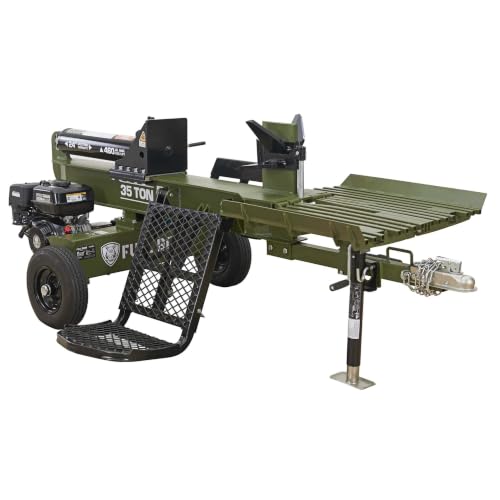
- Best Premium Pick: Full Boar 35 Ton 306cc Gas Log Splitter (around $3,700). A box beam, 4 way and 6 way wedges and a hydraulic log lift for logs up to 700 lbs.
- Runner Up: SuperHandy 25 Ton Portable Gas Log Splitter (around $1,400). A 7HP engine with a two stage Bucher pump on a compact half beam.
How We Chose the Best Log Splitter for Heavy Duty Use
Heavy duty use means gas power, high tonnage and a design that keeps working for hours. We compared splitting force, cycle time, log capacity, frame design and features that reduce lifting, along with owner ratings and review volume, price against features and current availability on amazon.com.
Log Splitter for Heavy Duty Use Reviews
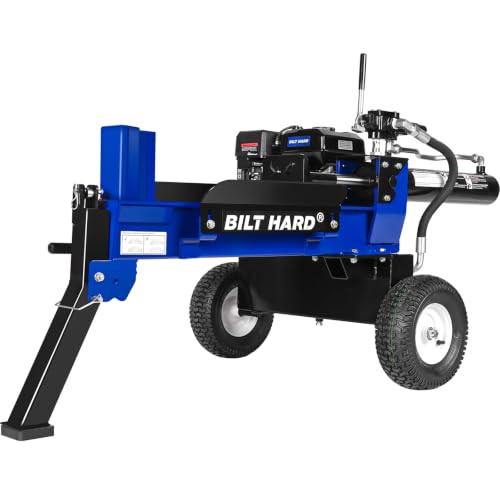
1. BILT HARD 30 Ton Horizontal/Vertical Gas Log Splitter: Best Overall
- 30 tons of splitting force from a 7.5 HP 223cc OHV engine
- Switches between horizontal and vertical modes
- 8 inch hardened steel wedge; logs up to 24 inches long
- 11 second full cycle with auto return
- 14 GPM two stage gear pump; 6 gallon hydraulic system
- 16 inch DOT tires, 2 inch ball coupler, towable up to 45 mph; oils included
Why We Picked It
The BILT HARD 30 Ton hits the sweet spot for serious home firewood production. Its 223cc OHV engine drives 30 tons of force, which handles large hardwood rounds, and an 11 second full cycle keeps the pile moving. Auto return sends the ram back on its own, so you can reach for the next log while it resets.
The dual position design is what makes it practical for heavy rounds. Instead of lifting a large log onto the beam, you tip the beam vertical and roll the round into place. A 14 GPM two stage pump and 6 gallon hydraulic system are built for long sessions, and the splitter tows behind an ATV or UTV on 16 inch DOT tires. Hydraulic and engine oil come in the box.
Pros
- Strong force for big hardwood
- Fast 11 second cycle
- Vertical mode avoids heavy lifting
- Towable full beam frame
Cons
- Heavy and large to store
- Gas engine needs regular care
Who Should Buy It
Choose the BILT HARD 30 Ton if you split several cords a year and want a fast, towable machine. It costs around $1,700.
2. Full Boar 35 Ton 306cc Gas Log Splitter: Best Premium Pick
- 35 tons of force from a 306cc engine
- Box shape beam for added strength and stability
- Tool free switching between 2 way, 4 way and 6 way wedges
- Hydraulic wedge height adjustment with 3.55 inches of range
- Hydraulic log lift for logs up to 700 lbs, doubling as a work table
Why We Picked It
The Full Boar is built for people who process wood in volume. The 4 way and 6 way wedges split a round into several pieces in one stroke, cutting the number of passes needed to fill the woodshed. You can switch between 2 way, 4 way and 6 way wedges without tools to match the size of each log.
Its hydraulic log lift is a real back saver, raising logs up to 700 lbs onto the beam with a lever pull. The hydraulic wedge adjustment centers the wedge on each round for even splits, and the box beam is designed for strength and stability under heavy loads. For large woodlots, it is the most capable machine in this guide.
Pros
- Multi way wedges speed up production
- Hydraulic log lift reduces strain
- Adjustable wedge height
Cons
- Very expensive
- Limited owner feedback so far
Who Should Buy It
Pick the Full Boar if you heat entirely with wood or sell firewood and want to split faster with less lifting. It costs around $3,700.

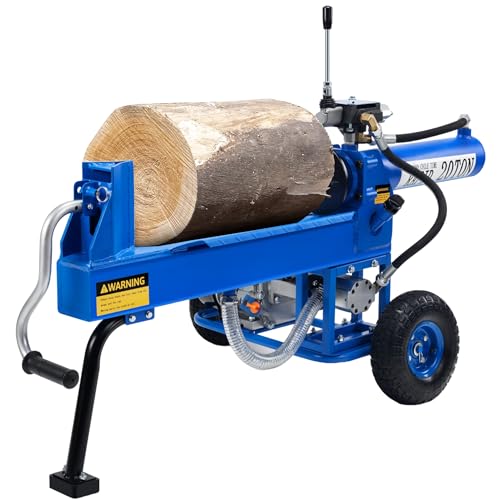
3. SuperHandy 25 Ton Portable Gas Log Splitter: Runner Up
- 25 tons of force from a 7HP AlphaWorks engine
- Two stage Bucher hydraulic gear pump
- Logs up to 20 inches long and 24 inches in diameter
- 12 second cycle time
- Half beam with horizontal and vertical operation
- 10 inch polyurethane wheels and a folding handle
Why We Picked It
Not every heavy duty user needs a towable full beam. The SuperHandy 25 Ton packs a 7HP engine and a two stage Bucher pump into a compact half beam frame that rolls on 10 inch wheels and folds for storage. It handles logs up to 24 inches in diameter, so big rounds are still on the menu.
A 12 second cycle keeps work moving, and horizontal and vertical operation lets you choose the easiest setup for each log. Note that hydraulic fluid is not included; SuperHandy recommends AW32. For smaller properties or tight storage, it delivers real gas power at a lower price.
Pros
- Compact and portable
- Handles wide rounds
- Lower price than full beam models
Cons
- Shorter maximum log length
- Hydraulic fluid sold separately
Who Should Buy It
Choose the SuperHandy if you split a lot of wood but lack space for a towable splitter. It costs around $1,400.

What Heavy Duty Use Really Means
Commercial grade components
Look for two stage pumps, hardened wedges, solid beams and reputable engines. These parts decide whether a splitter keeps running season after season.
Duty cycle and cooling
Long sessions heat the hydraulic oil. Larger oil reservoirs and good airflow help the system stay cool. Take short breaks during very long runs and check oil levels before each session.
Set up a smooth workflow, too. Park the splitter on level ground, keep unsplit rounds on one side and the finished pile on the other, and work at waist height whenever possible. A second person stacking wood speeds things up on a big day, as long as only one person ever operates the control lever.
Warranty and parts availability
Read the warranty terms before you buy, and check that wedges, hoses and filters are easy to replace. Buying from a brand with accessible support saves downtime later. Keep a spare hydraulic filter and a quart of the recommended fluid on the shelf, since a small leak in the middle of the season can otherwise stop work for days.
How to Choose the Best Log Splitter for Heavy Duty Use
Splitting Force (Tons)
For seasoned softwood, 20 tons is often enough. For large or green hardwood and knotty rounds, 25 to 35 tons is a safer choice. Our guide on what size log splitter do I need matches tonnage to wood type.
Electric vs Gas vs Manual
Gas splitters deliver the most force and mobility for heavy use. Electric models are quiet and work indoors but top out at lower tonnage. Manual splitters suit only occasional small jobs. Lighter users may prefer the best log splitter for homeowners.
Log Length and Diameter Capacity
Measure the length you cut your firewood to and make sure the beam fits it with room to spare. Diameter limits matter if you split wide trunks.
Cycle Time
Cycle time is how long the ram takes to extend and return. Faster cycles mean more splits per hour, which adds up over a big pile. Auto return valves help too, because the ram retracts on its own while you position the next log. Two stage pumps speed the ram when there is no load and slow it for power once the wedge meets the wood.
Horizontal vs Vertical
Horizontal mode is quick for logs you can lift. Vertical mode lets you roll heavy rounds into place without lifting. Dual position models give you both. If lifting is a concern, see our picks for the best log splitter for seniors.
FAQs About Log Splitters for Heavy Duty Use
Is a log splitter good for heavy duty use?
Yes, if you choose a gas model with enough tonnage. Hydraulic splitters with 25 tons or more handle large hardwood rounds day after day and save huge amounts of effort compared with an axe or maul.
How long does a log splitter last?
A well maintained gas splitter can last many years. Changing engine oil, checking hydraulic fluid and hoses, and storing the machine under cover keep it running.
Is a log splitter worth the money?
For anyone splitting several cords a year, yes. It saves time, energy and strain. Read is a log splitter worth it for a full cost breakdown.
How much should I spend on a log splitter?
Heavy duty gas splitters usually cost about $1,300 to $2,000, while premium models with log lifts and multi way wedges cost more. Lighter electric units cost less but are not built for heavy use.
How do I maintain a log splitter?
Check engine oil and hydraulic fluid before each use, grease the beam and wedge, inspect hoses for leaks and keep the wedge sharp. Drain or stabilize fuel before long storage.
Final Verdict
The BILT HARD 30 Ton is our pick as the best log splitter for heavy duty use, with a fast cycle, vertical mode and a towable frame. The Full Boar 35 Ton is the premium choice for high volume splitting, and the SuperHandy 25 Ton suits smaller properties. For more options, see our main list of the best log splitter picks and check today's prices on Amazon.