
What Is a Lawn Aerator Used for: Expert Tips and Step by Step Guide
Disclosure: We may earn a commission when you buy through links on this page, at no extra cost to you. As an Amazon Associate I earn from qualifying purchases. Learn more

What is a lawn aerator used for? How core and spike aerators relieve compaction, the main types, timing tips and who needs one.
A lawn aerator is used to loosen compacted soil by punching small holes or pulling out plugs of earth from your lawn, so air, water and fertilizer can reach the grass roots. That relieves compaction, breaks up thatch and helps grass grow thicker, greener and more drought tolerant. In short, if you have ever wondered what is a lawn aerator used for, the answer is healthier roots and a lawn that actually uses the water and nutrients you give it.
Below we explain what a lawn aerator is, how the different designs work, what they are good for on different types of yards, the main types, the pros and cons and how to decide whether you should buy one, rent one or hire the job out. You will also find practical timing tips so your first aeration delivers real results.

What Is a Lawn Aerator?
A lawn aerator is a tool or machine that makes openings in the soil beneath your grass. Over time, foot traffic, mowing, kids, pets and even heavy rain press soil particles together. This compacted soil squeezes out the air pockets roots need and makes water run off instead of soaking in. Thatch, the layer of dead stems and roots between the grass blades and the soil, can build up and make the problem worse.
An aerator fixes this by creating channels into the root zone. Some aerators push solid spikes into the ground, while others pull out small cores of soil and drop them on the surface. Both open the soil, but core removal relieves compaction more effectively.
Aerators range from simple hand tools you step on, to rolling push models, to tow behind units pulled by a lawn tractor, to powered machines that rental shops and lawn services use. The right choice depends on your lawn size, soil type and budget.
How Does a Lawn Aerator Work?
Every aerator is built around tines, the parts that enter the soil. How those tines are shaped decides how the aerator works.
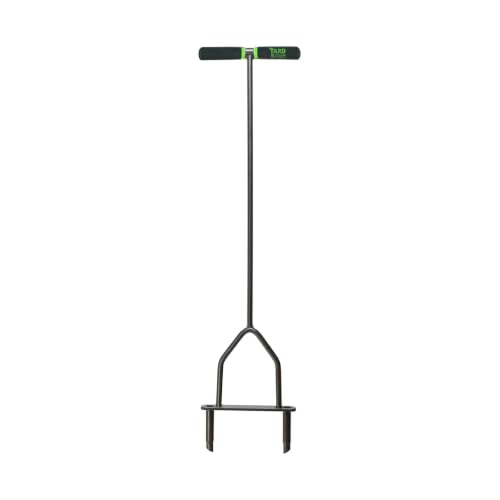
Hollow tines (core or plug aeration). A plug aerator uses hollow metal tubes. As each tine enters the ground, it fills with soil, then pulls out a small plug, usually a couple of inches long, and leaves it on the lawn. Removing that soil creates real space underground, which is why core aeration is the method most lawn experts recommend for compacted lawns. The plugs break down on the surface within a week or two and return nutrients to the grass.
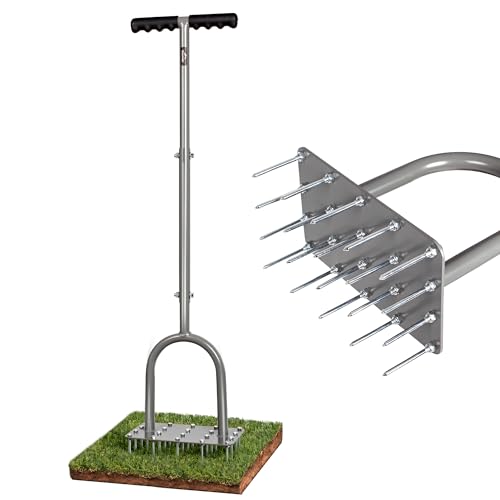
Solid tines (spike aeration). A spike aerator pushes solid spikes into the soil and pulls them out again without removing any earth. This opens holes for water and fertilizer, but it also presses the surrounding soil a little tighter. Spike aerators work best for light maintenance on soil that is not badly compacted.
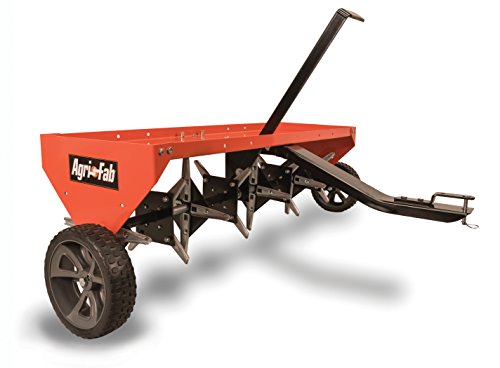
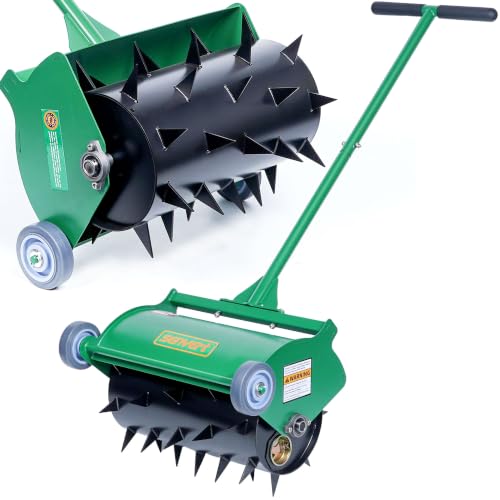
The frame and drive. Manual aerators have a long handle and a foot bar so you can step the tines into the soil. Rolling aerators mount spikes or tines on a drum that turns as you push. Tow behind aerators carry a row of tines or knives on an axle with a weight tray, so you can add sandbags or blocks to drive the tines deeper. Powered core aerators use an engine to drive the tines up and down.
Weight and depth. Penetration depth matters. The heavier the machine and the drier but not hard the soil, the deeper the tines go. That is why many tow behind aerators include a tray for extra weight.
Spacing matters as well. Holes a few inches apart give the best results, so a single pass with a narrow tool often leaves gaps. Many owners make two passes in different directions, which roughly doubles the number of openings and gives a more even result across the whole lawn.
What Is a Lawn Aerator Used For?
An aerator does the same basic job everywhere, but how much it helps depends on your yard.
Clay & Rocky Soil
Clay soil compacts easily and drains poorly, which makes it the most common reason to aerate. Core aerators are best here, since spikes can glaze the sides of the holes in clay. In rocky soil, go slowly and expect shallower holes. Our guide to the best lawn aerator for clay soil covers tools that cope with heavy ground.
Hills & Uneven Terrain
Slopes shed water quickly, so aeration helps rain soak in instead of running off. Manual and push aerators work well on gentle slopes. Tow behind units can be used on mild grades, but go straight up and down and avoid steep sidehills.
Large Yards
For half an acre or more, a tow behind aerator pulled by a lawn tractor or a rented powered core aerator saves hours of work. Wide units of around 40 to 48 inches cover a lot of ground in each pass.
Small Yards
In small lawns, a manual core tool or rolling spike aerator is often enough. It is cheap, needs no storage space to speak of and works well for problem spots like paths and play areas.
Tall / Thick Grass
Aerating through tall grass is harder, because the tines struggle to reach the soil. Mow first, then aerate. Dense turf also benefits most from aeration, since thick grass tends to build up thatch faster.
Types of Lawn Aerators
Manual core and spike tools. These step on tools have two to four hollow or solid tines on a long handle. They cost around $30 to $70, work well on small lawns and spot problems and are often recommended for clay patches. Popular examples include the Yard Butler coring aerator and Walensee spike tools.
Rolling push aerators. A drum covered in spikes or tines rolls as you push it. They are faster than step tools on small to medium lawns and cost roughly $60 to $260, with heavier models like the SENVERT rolling aerator accepting extra weight.
Tow behind aerators. These hitch to a lawn tractor or ATV. Spike versions such as the Suchtale 40 inch model cost around $130 to $140, while plug versions like the Agri-Fab 48 inch with galvanized knives cost about $320.
Powered core aerators. Engine driven machines pull deep, even plugs and are what professional lawn services use. Most homeowners rent them for a day rather than buy.
Aerator shoes. Spiked sandals strap to your boots. They are cheap but only make shallow spike holes and are best treated as a light touch up tool.
Pros and Cons
Aeration has clear benefits. It relieves compaction, improves water absorption, helps fertilizer and seed reach the soil, reduces runoff and encourages deeper, stronger roots. It is also the best way to prepare a lawn for overseeding.
There are drawbacks too. Manual aeration is hard physical work on larger lawns. Spike aerators can add a little compaction around each hole. Powered machines are heavy and costly to buy, and rentals need a truck or trailer. Core plugs left on the lawn look messy for a week or two.
- Pros: healthier roots, better water and nutrient uptake, less runoff, better results from seeding
- Cons: physical effort, temporary mess, cost of powered machines, spikes less effective on heavy clay
Is a Lawn Aerator Right for You?
An aerator is worth considering if water puddles or runs off your lawn, the grass thins in high traffic areas, the soil feels hard when you push a screwdriver into it or you plan to overseed. Most lawns benefit from aeration once a year, and heavy clay or busy family lawns may need it twice.
Time it for when your grass is actively growing: early fall or spring for cool season grasses, late spring or early summer for warm season grasses. Aerate when the soil is moist but not soggy. Water the lawn a day or two before aerating if the ground is dry, and mark sprinkler heads and shallow lines so the tines do not hit them. Afterward, leave the plugs to break down, then seed or fertilize while the holes are open. For the cost side of the decision, read is a lawn aerator worth it.
Frequently Asked Questions
How does a lawn aerator work?
So, how does a lawn aerator work? It pushes tines into the soil to open channels for air, water and nutrients. Hollow tines pull out small plugs of soil, which relieves compaction best, while solid spikes simply poke holes. Weight, soil moisture and tine length decide how deep the tines reach.
Is a lawn aerator worth buying?
For small lawns, a manual or rolling aerator is cheap and worth owning. Tractor owners with large yards often find a tow behind aerator a good investment. If you only aerate once a year and want deep core aeration, renting a powered machine or hiring a service can be the better value.
How long does a lawn aerator last?
Simple manual and tow behind aerators can last many years because they have few moving parts. Clean off soil after each use, store them dry to prevent rust and replace worn or bent tines when needed. Powered aerators also need regular engine maintenance to keep running well.
Final Thoughts
So, what is a lawn aerator used for? It loosens compacted soil so air, water and nutrients reach the roots, giving you thicker, healthier grass. Core aerators work best for compaction, while spike tools suit light upkeep. When you are ready to buy, see our picks for the best lawn aerator, compare the best lawn aerator for heavy duty use for big jobs and check our guide on where to buy a lawn aerator.


