What Is a Pole Saw Used for? Everything You Need to Know (2026)
Disclosure: We may earn a commission when you buy through links on this page, at no extra cost to you. As an Amazon Associate I earn from qualifying purchases. Learn more
What is a pole saw used for? Pruning high tree limbs from the ground, plus how it works, the main types and who should own one.
A pole saw is used to cut tree limbs and branches that are too high to reach from the ground, typically somewhere around 8 to 15 feet up depending on the model. It puts a small saw blade or chainsaw head on the end of a long or telescoping pole, so you can prune, shape and clear overhead growth without climbing a ladder. That is the short answer to what is a pole saw used for, and it explains why the tool has become a staple for homeowners with mature trees.
Below, you will learn how a pole saw works, the main jobs it handles, the different types, its pros and cons and how to tell whether one belongs in your shed.
What Is a Pole Saw?
A pole saw, sometimes called a pole pruner, is a cutting tool mounted on the end of a long shaft. The shaft is often a telescoping pole made of aluminum or fiberglass, which lets you adjust the reach for each cut.
There are two broad families. Manual pole saws use a curved pruning blade that you pull back and forth, and many add a rope operated lopper for thinner branches. Powered pole saws use a small chain and bar, much like a mini chainsaw, driven by a gas engine, a battery or a corded electric motor.
The goal in both cases is the same: let you work from the ground. Keeping both feet planted is far safer than balancing on a ladder with a saw in one hand, and it lets you reach branches above a roofline, over a fence or across a flower bed.
How Does a Pole Saw Work?
If you have wondered how does a pole saw work, it helps to look at the main parts and how they work together.
- Cutting head. On a powered model, this is a short guide bar, usually 6 to 12 inches long, with a saw chain running around it. Manual models use a curved, coarse toothed blade instead.
- Motor or engine. Powered pole saws place the motor either at the top near the bar or at the bottom near your hands. A drive shaft inside the pole carries power up to the chain when the motor sits low.
- Pole. A fixed or telescoping pole sets your reach. Locking collars hold each section at the chosen length.
- Oiling system. A small reservoir feeds bar and chain oil onto the chain as it runs, cutting friction and heat. Many models oil automatically.
- Controls. A trigger and safety lockout sit on the handle at the bottom, along with a battery slot, fuel tank or cord connection.
When you squeeze the trigger, the chain races around the bar and its teeth cut into the wood. You rest the saw on top of the branch, let the weight of the head do most of the work and guide it through the cut. With a manual saw, you supply the power with steady pulling strokes, and the blade's teeth are usually designed to cut on the pull.
Good technique matters as much as the tool. For heavier limbs, arborists use a three cut method: a shallow undercut a short distance out from the trunk, a top cut slightly farther out to drop the weight, and a final cut just outside the branch collar. This keeps bark from tearing down the trunk and leaves a clean wound that the tree can seal over time.
What Is a Pole Saw Used For?
Most owners buy one for tree work, but a pole saw handles several jobs around the yard.
Trees
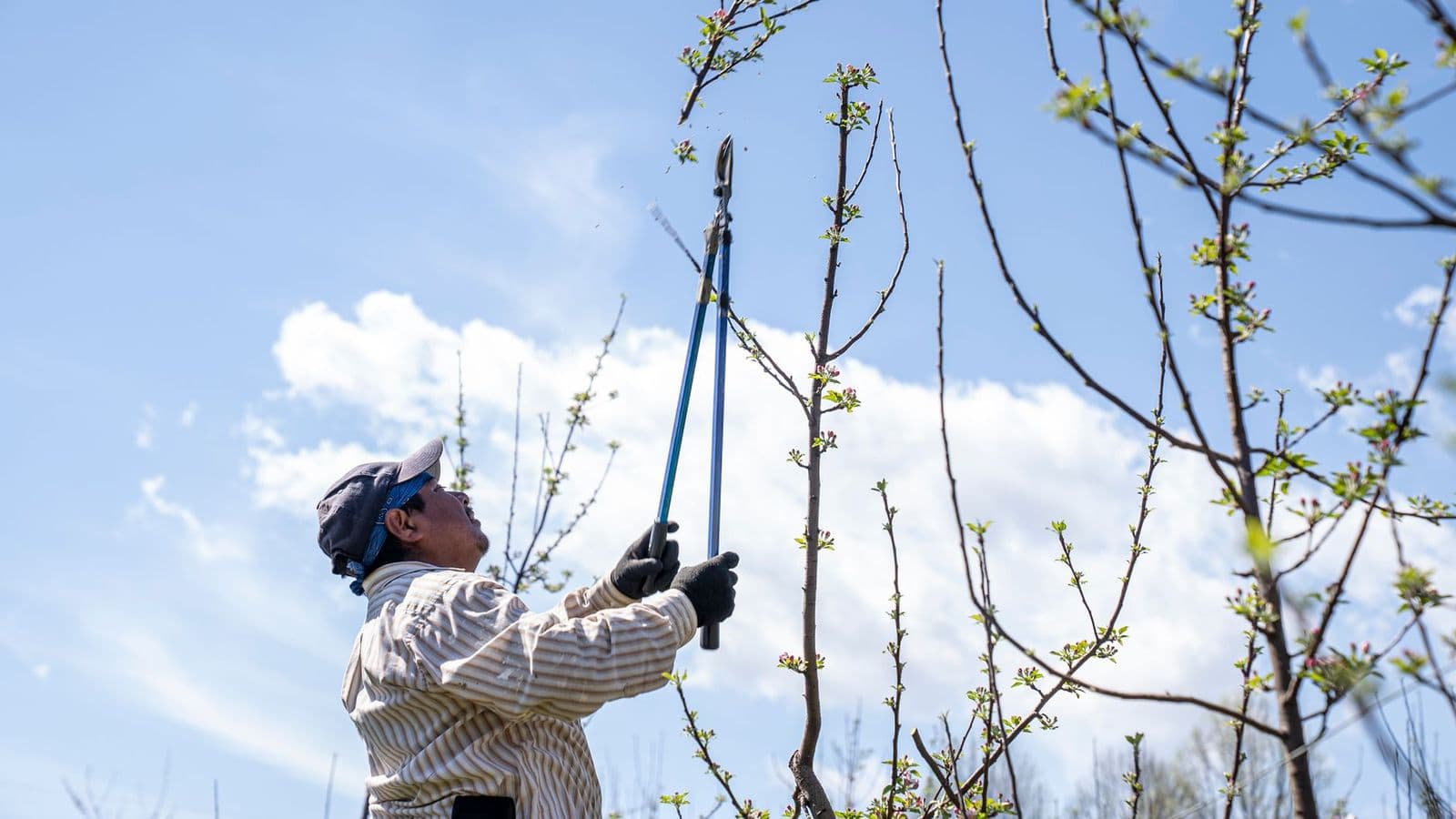
Pruning tree limbs is the main job. A pole saw removes dead, broken or crossing branches, raises the canopy so you can walk or mow underneath and thins growth to let more light reach your lawn. It also trims branches that rub against a roof, hang over a driveway or block a window view.
Hedges & Bushes
Tall, overgrown shrubs often develop thick, woody stems that a hedge trimmer cannot cut. A pole saw can take out those older stems at the top or back of a large shrub, which helps reshape it. Some battery systems also offer hedge trimmer attachments for lighter shaping work.
Storm Cleanup and Clearance
After wind or ice storms, a pole saw is handy for removing hanging or snapped limbs that are stuck in the canopy. Some models can also detach from the pole for cutting fallen branches into manageable pieces on the ground. Never use a pole saw near power lines; call your utility or a licensed tree service for any branch close to them.
Types of Pole Saws
- Manual pole saws. The simplest and cheapest option. They are silent, light and need no fuel or charging, and many reach well beyond powered models thanks to long sectional poles. They do take more effort on thick limbs.
- Cordless pole saws. The most popular choice for homeowners. They start instantly, run quietly and often share batteries with other tools. Runtime depends on battery size.
- Corded electric pole saws. Light and affordable with unlimited runtime, but the cord limits how far from an outlet you can work.
- Gas pole saws. The most powerful option, with longer bars for thicker limbs and unlimited runtime. They are heavier, louder and need regular engine care.
- Pole saw attachments. Some trimmer systems let you add a pole saw head to a shared power unit, which saves money if you already own the base tool.
When comparing types, think about the height of the branches you need to reach and how often you will use the tool. Your own height and arm reach add several feet to the pole length, so you rarely need the longest model on the shelf. Weight at full extension matters more than raw power for most homeowners.
Pros and Cons
Pros:
- Cuts high branches while you stay on the ground
- Faster and safer than a ladder and handsaw
- Telescoping reach adapts to different trees
- Some models convert into a small chainsaw
Cons:
- Heavy and tiring to hold at full extension
- Limited to small and medium limbs
- Falling debris requires care and safety gear
- Powered models need chain sharpening and oiling
Is a Pole Saw Right for You?
A pole saw makes sense if you have several trees that need regular pruning, branches over your roof or driveway, or a property where hiring a tree service every year adds up. It also suits anyone who wants to shape trees gradually instead of waiting for overgrowth.
If you only have a couple of small ornamental trees, a pair of loppers and a handsaw may be enough. For very large limbs, tall trees or anything near power lines, a professional arborist is the safer choice.
Whatever you choose, plan for basic safety gear. Wear eye protection, gloves and a hard hat, keep people and pets well clear of the drop zone and never stand directly under the branch you are cutting. Work at an angle so falling wood lands away from you.
Frequently Asked Questions
Can a pole saw cut thick branches?
A pole saw handles small to medium limbs well, and a powered model with an 8 to 12 inch bar can cut branches several inches thick. Very large limbs are heavy, hard to control from the ground and can swing back toward you as they fall. Cut those in sections or leave them to a professional tree service.
Is a pole saw worth buying?
For homeowners with mature trees, usually yes. It replaces ladder work, saves on tree service fees for routine pruning and lets you trim on your own schedule. Our article on whether is a pole saw worth it compares the cost with hiring help, and our guide on where to buy a pole saw covers the best places to shop.
How long does a pole saw last?
With basic care, a pole saw can last many years. Keep the chain sharp, top up bar oil, clean sap and sawdust off the head after use, and store batteries or fuel properly. Manual saws mainly need occasional blade replacement, while gas models last longest with fresh fuel and regular tune ups.
Final Thoughts
So, what is a pole saw used for? Mainly pruning tree limbs and clearing high branches from the ground, plus trimming woody shrubs and cleaning up after storms. If you are ready to buy, start with our picks for the best pole saw, then compare the best pole saw for backyards and the best pole saw for dead leaves for more specific needs.