
Best Fertilizer Spreaders for Homeowners (2026): 3 Top Rated Picks Worth Buying
Disclosure: We may earn a commission when you buy through links on this page, at no extra cost to you. As an Amazon Associate I earn from qualifying purchases. Learn more

Scotts, Brinly and VEVOR push spreaders compared: our best fertilizer spreader for homeowners picks and how to choose the right one.
Feeding a lawn by hand almost always ends the same way: dark green stripes where granules piled up, pale patches where they never landed and a scattering of fertilizer on the driveway. Many homeowners blame the product when the real problem is the tool. The best fertilizer spreader for homeowners lays down an even pattern at the rate on the bag, keeps granules out of flower beds and is simple enough to use right out of the box.
We compared manufacturer specs, verified owner feedback on Amazon, expert reviews and price against value, keeping only current models in stock. Our picks are the Scotts Turf Builder EdgeGuard DLX, the Brinly P20-500BHDF-A push spreader and the VEVOR 60 lb walk behind spreader.

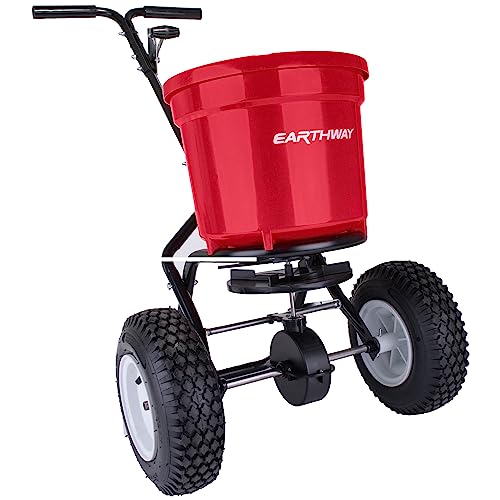

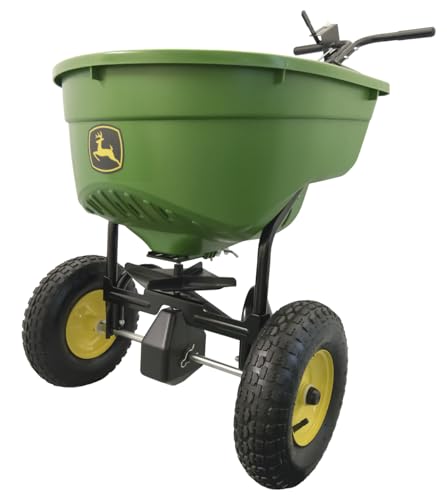

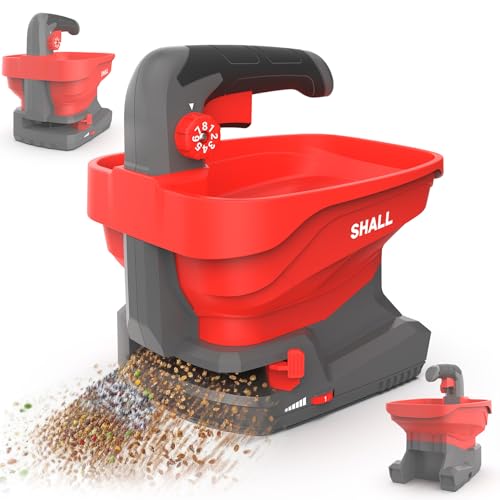
Our Top 3 Picks at a Glance
- Best Overall: Scotts Turf Builder EdgeGuard DLX Broadcast Spreader (around $90). Pre calibrated, no assembly and holds enough product for up to 15,000 square feet.
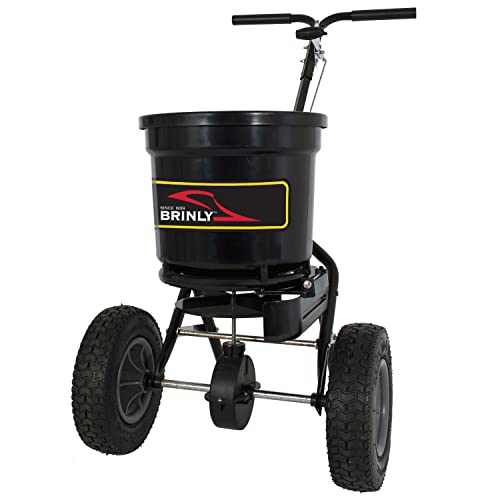
- Best Premium Pick: Brinly P20-500BHDF-A Push Spreader (around $250). A 50 lb rust proof hopper, enclosed gearbox, stainless hardware and pneumatic tires.
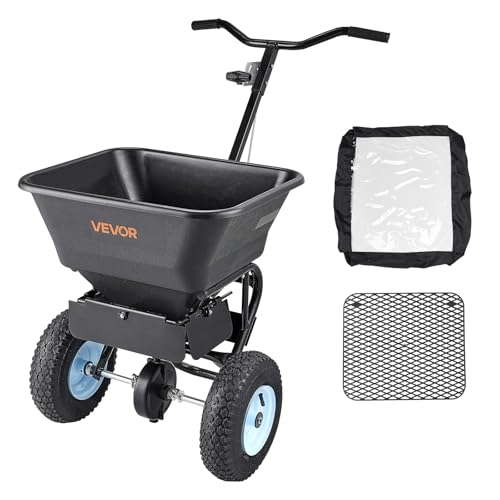
- Best Value: VEVOR 60 lb Walk Behind Broadcast Spreader (around $80). A large hopper, 18 settings and pneumatic tires for a low price.
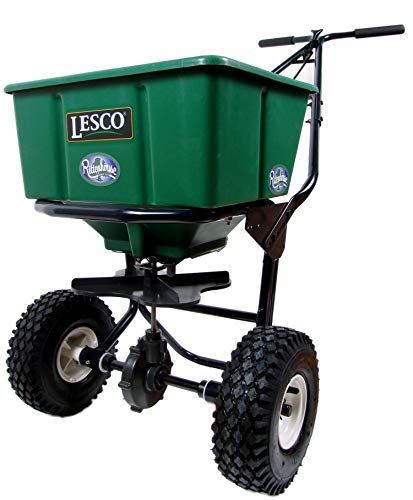
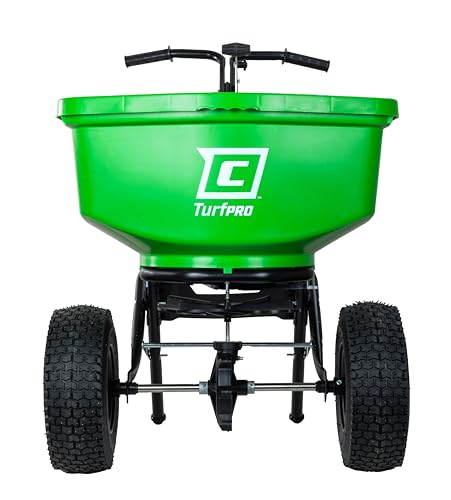
The product table above adds more push and handheld spreaders from Lesco, Chapin, EarthWay, Agri-Fab, John Deere, Scotts and Amazon Basics. For every lawn size and type, see our main guide to the best fertilizer spreader.
How We Chose the Best Fertilizer Spreader for Homeowners
We looked for spreaders that give even coverage, protect beds and hardscape, are easy to set and push and hold up to corrosive fertilizer. We weighed owner ratings and review volume, price against features, build quality and warranty, and kept only current models in stock on amazon.com. Simple setup counted heavily, because most homeowners use a spreader only a few times a year.
Fertilizer Spreader for Homeowners Reviews
1. Scotts Turf Builder EdgeGuard DLX Broadcast Spreader: Best Overall
- Pre calibrated, no assembly required
- Holds up to 15,000 sq ft of Scotts lawn products
- EdgeGuard side shield keeps product off beds, driveways and sidewalks
- Hopper and agitator for smooth, consistent flow
- Spreads seed, fertilizer, salt and ice melt
Why We Picked It
The EdgeGuard DLX is the easiest way for most homeowners to get an even feed. It arrives pre calibrated and ready to use, so there is nothing to assemble or adjust before the first application. Scotts prints matching settings on its fertilizer and seed bags, which removes the guesswork that leads to burned stripes.
Capacity suits medium and large suburban lawns. The hopper holds enough Scotts product for up to 15,000 square feet, and an agitator keeps granules moving for a consistent pattern. Flip the EdgeGuard shield down along borders and it blocks the throw on one side, so you can run along flower beds, walks and the driveway without wasting product or staining concrete.
It works all year as a seed spreader in fall and an ice melt spreader in winter, which makes it a versatile first spreader for homeowners and beginners alike.
Pros
- Ready to use out of the box
- EdgeGuard protects beds and hardscape
- Bag settings make calibration simple
Cons
- Plastic build is lighter duty than steel spreaders
- Settings are made for Scotts products first
Who Should Buy It
Homeowners with average to large lawns who want simple, even feeding with minimal setup. It costs around $90.

2. Brinly P20-500BHDF-A Push Spreader: Best Premium Pick
- 50 lb heavy duty, rust proof hopper with hopper grate
- Side deflector kit that flips up when not needed
- 12 x 3 inch pneumatic turf tread tires
- Fully enclosed, rust resistant gearbox
- Stainless steel hardware, shaft and agitator
Why We Picked It
Fertilizer salts eat cheap spreaders from the inside out, so build quality is where the Brinly earns its price. It uses a fully enclosed, rust resistant gearbox and stainless steel hardware, shaft and agitator, which Brinly says reduces maintenance and downtime. The 50 lb hopper is rust proof and fitted with a grate to catch clumps before they jam the flow.
The included side deflector controls where material goes and flips up and out of the way when you are in the open lawn. Large 12 inch pneumatic tires roll smoothly over bumps and soft ground, which also helps keep the spread pattern steady.
Easy to reach controls and simple calibration settings make it approachable despite its heavier build. For mid size lawns, it is a sturdy spreader that should last for many seasons.
Pros
- Rust resistant gearbox and stainless parts
- Side deflector protects beds
- Smooth rolling pneumatic tires
Cons
- Requires assembly
- Costs more than most homeowner spreaders
Who Should Buy It
Homeowners who feed and seed several times a year and want a durable spreader that resists corrosion. It costs around $250.

3. VEVOR 60 lb Walk Behind Broadcast Spreader: Best Value
- 60 lb hopper capacity
- Spreading width up to about 9.8 feet
- 18 adjustable settings
- 8 inch pneumatic all terrain tires
- Powder coated steel frame, tool free assembly
Why We Picked It
The VEVOR spreader packs a big hopper and pneumatic tires into a budget price. Its 60 lb capacity holds a full bag of most lawn products, so you refill less often than with compact spreaders. Eighteen adjustable settings help you match the rate to fertilizer, seed or ice melt.
The frame is powder coated steel, and the 8 inch pneumatic tires handle grass, gravel and even snow. VEVOR says assembly needs no tools, which suits first time buyers. It is a practical choice for homeowners who want more capacity than a mini spreader without paying premium prices.
Without an edge shield, take care along beds and driveways by making a header pass around the border first and keeping the throw pointed away from hard surfaces.
Pros
- Large hopper for the price
- Pneumatic tires
- Many rate settings
Cons
- No edge guard
- Plastic hopper is less rugged than premium models
Who Should Buy It
Budget minded homeowners with medium lawns who want a large capacity spreader with smooth rolling tires. It costs around $80.

What First Time Buyers and Homeowners Should Know
Your first spreader should be easy to set, sized to your lawn and simple to care for.
Simple controls and clear settings
Look for a clear rate dial and settings that match the products you buy. Pre calibrated spreaders take most of the guesswork out of the first application.
Right sized hopper for a typical yard
A hopper that covers your lawn in one or two fills saves time. If you are wondering which fertilizer spreader is best for beginners, a mid size broadcast model is the safest bet for most lawns.
Maintenance you can handle yourself
Empty the hopper, rinse the spreader and let it dry after every use. That one habit prevents most corrosion and sticking.
How to Choose the Best Fertilizer Spreader for Homeowners
Match the spreader to your lawn size, shape and how often you feed.
Broadcast vs Drop vs Handheld
A broadcast spreader throws granules in a wide arc and covers lawns quickly. A drop spreader releases granules straight down for precise edges but is slower. Handhelds suit small areas and are often the best fertilizer spreader for beginners with tiny lawns. See the best fertilizer spreader for small yards for compact options.
Hopper Capacity
Small spreaders hold enough for a few thousand square feet, while large push models take 50 to 130 lb. Bigger hoppers are heavier to push when full, especially on slopes.
Coverage Area
Check how much lawn one load covers. Matching coverage to your lawn means fewer stops and more even application of lawn fertilizer and grass seed.
Edge Guard and Calibration
An edge guard or side deflector blocks one side of the throw along beds and hardscape. Clear, repeatable settings make your results consistent each season.
If your product bag does not list your spreader, do a quick test. Spread a measured amount over a known area, such as 1,000 square feet marked on the driveway or lawn, then adjust the dial until the amount used matches the bag's rate. Write the setting on the spreader so you never have to repeat the test.
Wheels and Frame
Pneumatic tires roll more smoothly on bumpy or hilly ground, and steel frames with stainless parts resist corrosion. Sloped yards need stable wheels, covered in our list of the best fertilizer spreader for steep hills.
Battery Powered Options
Battery handheld spreaders spin the plate for you and give a steadier pattern than hand cranking. They suit small yards and people who find cranking tiring.
FAQs About Fertilizer Spreaders for Homeowners
Is a fertilizer spreader good for beginners?
Yes. A spreader is one of the simplest lawn tools to learn. Set the rate from the product bag, fill the hopper on a driveway or tarp, walk at a steady pace and slightly overlap passes. Pre calibrated broadcast models make it even easier for first time users.
When is the best time to fertilize a lawn?
For cool season grasses like fescue and bluegrass, early fall is the most important feeding, with a lighter one in spring. Warm season grasses like Bermuda and zoysia are fed from late spring through summer while they grow actively. Always follow the timing and rate on the product bag.
How long does a fertilizer spreader last?
With regular rinsing and dry storage, a good spreader can last many seasons. Fertilizer salts corrode gears and metal parts, so cleaning after every use matters more than price. Models with enclosed gearboxes and stainless hardware tend to last longest.
Is a fertilizer spreader worth the money?
For nearly every lawn, yes. Even application prevents burned stripes and missed patches and helps you use only the amount of product the bag recommends, which saves money over time.
How much should I spend on a fertilizer spreader?
Handheld spreaders cost around $20 to $60, homeowner push spreaders around $60 to $120 and heavy duty models around $250 or more. Our guide on how much does a fertilizer spreader cost explains each tier, and where to buy a fertilizer spreader compares stores.
How do I maintain a fertilizer spreader?
Empty leftover product, rinse the hopper, plate and gears with a hose and let everything dry in the sun. Check tire pressure on pneumatic wheels, keep moving parts free of caked granules and store the spreader indoors.
Final Verdict
The Scotts EdgeGuard DLX is the best fertilizer spreader for homeowners who want simple, even feeding with almost no setup. The Brinly push spreader is the durable premium choice for frequent use, and the VEVOR 60 lb model is the value pick for bigger lawns on a budget. Check today's price on Amazon before your next feeding.


