
Best Fertilizer Spreaders for Steep Hills in 2026: Our Top 3 Picks Reviewed
Disclosure: We may earn a commission when you buy through links on this page, at no extra cost to you. As an Amazon Associate I earn from qualifying purchases. Learn more

Big tires and a stable frame matter on a slope. Here is the best fertilizer spreader for steep hills, plus tips for even coverage on uneven ground.
Fertilizing a hillside lawn is harder than it looks. Small plastic spreaders tip over on side slopes, skinny wheels slide on wet grass, and every bump changes how much product hits the ground, leaving stripes of dark green and pale yellow. The best fertilizer spreader for steep hills has big tires that grip, a frame that stays stable and a gearbox that keeps spreading evenly when the ground is anything but even. We compared current spreaders on tires and frame, hopper size, spread control, verified owner ratings on Amazon, expert advice and price against value.
Our picks are the Chapin 8400C professional turf spreader with its stainless steel frame, the Agri-Fab 45-0614 push spreader with 13 inch pneumatic tires, and the VEVOR 130 lb spreader that can be pushed or towed.






Our Top 3 Picks at a Glance
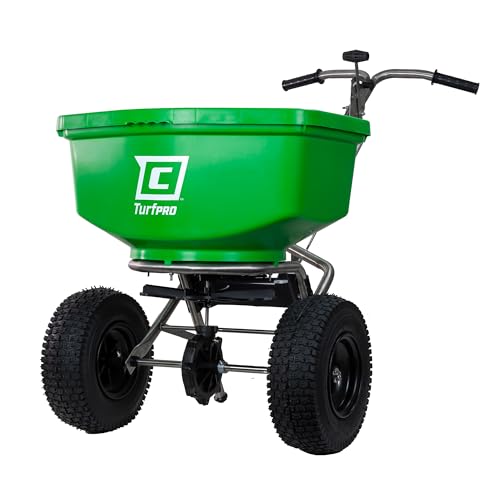
- Best Overall: Chapin 8400C 100 lb Professional SureSpread Turf Spreader (around $385). Stainless steel frame and linkage, an enclosed gearbox and 14 inch tires, made in USA.
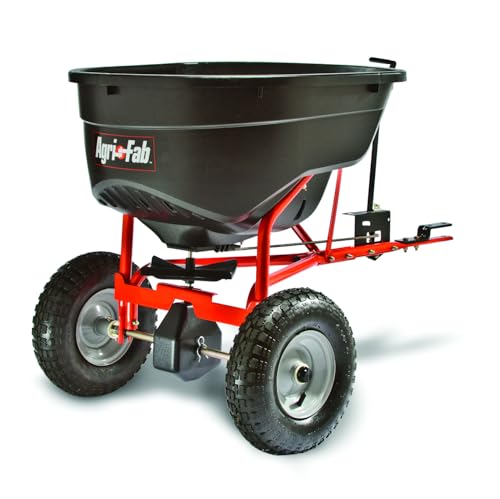
- Runner Up: Agri-Fab 45-0614 130 lb Push Broadcast Spreader (around $250). 13 x 4 inch pneumatic tires, a 10 to 12 ft spread and coverage up to half an acre per fill.
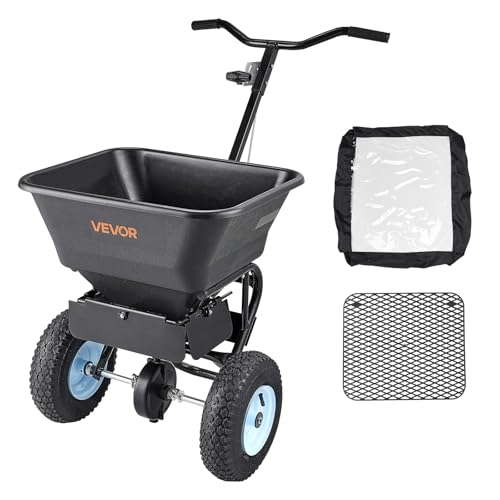
- Best Value: VEVOR 130 lb Tow or Push Broadcast Spreader (around $150). Converts between towing and pushing, with 13 inch pneumatic tires and 30 flow settings.
How We Chose the Best Fertilizer Spreader for Steep Hills
Slopes reward stability and traction, so we looked first at tire size, frame strength and how well the drive holds an even spread over bumps. We then compared owner ratings and review volume, price against features, build quality and warranty, and current availability on amazon.com.
Fertilizer Spreader for Steep Hills Reviews
1. Chapin 8400C 100 lb Professional SureSpread Turf Spreader: Best Overall
- 100 lb hopper capacity
- Stainless steel frame and linkage
- Enclosed gearbox
- 14 inch tires
- Rotary gate; made in USA
Why We Picked It
On a hillside, cheap spreaders show their weaknesses fast. The Chapin 8400C is built like a professional tool, with a stainless steel frame and linkage that will not rust or flex and an enclosed gearbox that keeps grit and moisture away from the gears. When you are fighting gravity across a slope, that sturdiness translates into a steadier spread.
The 14 inch tires help the Chapin roll over bumps and ruts without bouncing the hopper. A rotary gate controls the flow, and the 100 lb hopper holds enough product for a big sloped yard without constant refills. It costs more than typical spreaders, but it is made to last for many seasons of hard use.
Pros
- Rust resistant stainless frame
- Large tires for rough, sloped ground
- Enclosed gearbox protects the drive
Cons
- Expensive for a push spreader
- Heavy to push uphill when full
Who Should Buy It
Choose the Chapin 8400C if you treat a steep or rough lawn several times a year and want a spreader that will last. It costs around $385.

2. Agri-Fab 45-0614 130 lb Push Broadcast Spreader: Runner Up
- 130 lb hopper covers up to 1/2 acre (25,000 sq ft)
- 10 to 12 ft spread width
- 13 x 4 inch pneumatic tires
- Easy to use direct rod flow control
- Made in USA
Why We Picked It
The Agri-Fab 45-0614 is the current version of Agri-Fab's 130 lb push spreader, and it has what a hilly lawn needs. Wide 13 x 4 inch pneumatic tires grip grass and soften the ride over uneven ground, which keeps the hopper steadier and the spread more even. The 10 to 12 foot spread width means fewer passes up and down the slope.
With up to half an acre of coverage per fill, it suits larger sloped yards, and the direct rod control lets you shut the flow quickly when you turn at the top or bottom of the hill. That reduces the heavy stripes that form when you pause on a slope.
Pros
- Pneumatic tires grip on slopes
- Large hopper for big lawns
- Quick flow shutoff
Cons
- Heavy when fully loaded
- Poly hopper less rugged than the Chapin frame
Who Should Buy It
Pick the Agri-Fab 45-0614 if you want a capable, large capacity push spreader for a hilly yard at a fair price. It sells for around $250.

3. VEVOR 130 lb Tow or Push Broadcast Spreader: Best Value
- 130 lb hopper
- Works as a tow behind or push spreader
- 13 inch pneumatic tires for grass, gravel and snow
- About a 10 ft spread with 30 adjustable settings
- Powder coated steel frame and aluminum gears; tool free assembly
Why We Picked It
Some sloped properties have gentle grades where a riding mower can safely tow, and steeper banks where you need to walk. The VEVOR spreader handles both, switching between tow and push use. Its 13 inch pneumatic tires help on rough or uneven ground, which makes it a strong choice if you want the best fertilizer spreader for uneven terrain on a budget.
Thirty flow settings let you fine tune the rate, which matters on hills where you may want a lighter application to reduce runoff. The 130 lb hopper means fewer trips back to refill, and assembly needs no tools. It does not have the premium build of the Chapin, but it costs far less.
Pros
- Tow or push flexibility
- Large pneumatic tires
- Very good value for a 130 lb spreader
Cons
- Narrower spread than the Agri-Fab
- Build is less heavy duty than pro models
Who Should Buy It
Go with the VEVOR if your property mixes towable slopes with walk only banks and you want to keep costs down. It costs around $150.

Working on Hills and Uneven Terrain
Technique matters as much as equipment on a slope.
Traction and drive systems
Wide pneumatic tires grip better than hard plastic wheels and keep the gear drive turning at a steady rate. Avoid spreading when grass is wet and slippery.
Weight balance and stability
A full hopper raises the center of gravity. On steep slopes, fill the hopper halfway and work across the hill rather than straight up and down when it is safe to do so.
Safety on slopes
Never tow a spreader on a slope your mower cannot handle safely. Wear shoes with good grip, and shut the gate before turning or stopping.
How to Choose the Best Fertilizer Spreader for Steep Hills
Start with your slope and lawn size, then match the spreader type. Our guide on how much does a fertilizer spreader cost covers typical prices.
Broadcast vs Drop vs Handheld
A broadcast spreader throws lawn fertilizer and grass seed in a wide arc and is the most practical choice for hills. A drop spreader is precise but its narrow path means many trips up and down. Handheld spreaders work for small banks only.
Hopper Capacity
A 50 to 130 lb hopper covers most yards in one or two fills. On steep ground, partial fills keep the spreader easier to control.
Coverage Area
Check the stated coverage per fill against your lawn size. Wider spread widths mean fewer passes on the slope. Keep in mind that spread patterns often shift on a side slope, as more product tends to land on the downhill side, so overlap your passes a little more than you would on flat ground.
Edge Guard and Calibration
Side deflectors and accurate rate settings keep fertilizer off driveways and out of storm drains, which matters on slopes where runoff is likely. Check the rate chart on the fertilizer bag and start one setting lower on hills, then adjust after a test pass.
Wheels and Frame
Pneumatic tires and a stiff steel or stainless frame are the two most important features for hills. For flatter lots, see our picks for the best fertilizer spreader for small yards and the best fertilizer spreader for homeowners.
FAQs About Fertilizer Spreaders for Steep Hills
Can a fertilizer spreader be used for steep hills?
Yes, with the right model and technique. Choose a spreader with large pneumatic tires and a stable frame, fill it partway and work across the slope when safe. Shut the gate before turning to avoid heavy stripes.
How long does a fertilizer spreader last?
A well built spreader can last many years. Stainless frames and enclosed gearboxes hold up best. Rinsing off fertilizer after each use prevents corrosion and keeps the gate working smoothly.
Is a fertilizer spreader worth the money?
Yes. Even coverage means healthier turf and less wasted product, and a good spreader pays for itself in fertilizer savings over a few seasons.
How much should I spend on a fertilizer spreader?
Solid push and tow spreaders for sloped yards cost around $150 to $250, while professional models run from about $350 to $400.
How do I maintain a fertilizer spreader?
Empty and rinse the hopper and gears after each use, let it dry, lubricate moving parts and check tire pressure. Store it indoors. Our where to buy a fertilizer spreader guide covers parts.
Final Verdict
The Chapin 8400C is our top pick for steep, rough lawns, the Agri-Fab 45-0614 is a capable large capacity runner up and the VEVOR tow or push spreader is the value choice. If you are asking which fertilizer spreader is best for steep hills, start with tires and frame. See our overall best fertilizer spreader list too, and whichever best fertilizer spreader for steep hills you choose, check today's price on Amazon.


